 Save
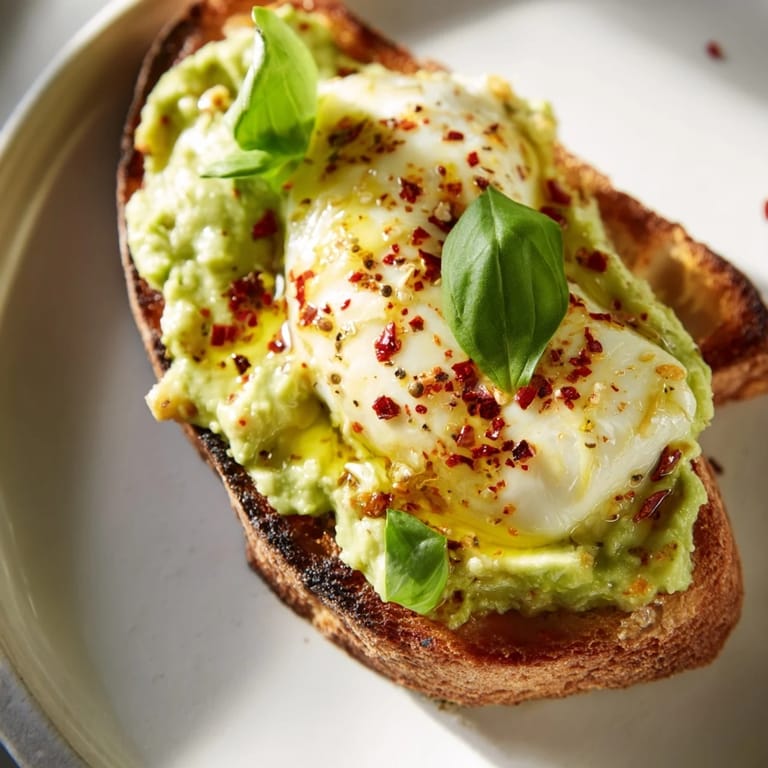
Save I stumbled onto this tartine on a Tuesday afternoon when my fridge looked bare but I had a perfectly ripe avocado and some mozzarella that needed using. I wasn't expecting much, just something fast to quiet my stomach. But the moment that cheese started bubbling under the broiler and the smell hit me, I knew I'd accidentally made something I'd crave again and again. It's become my go-to when I want something that feels indulgent but comes together in the time it takes to boil water.
The first time I made this for my sister, she looked skeptical. Avocado and cheese together sounded odd to her, but one bite in and she was quiet, just chewing thoughtfully with that look people get when they're pleasantly surprised. She asked for the recipe before she even finished her plate. Now she texts me photos of her own versions, sometimes with tomatoes, sometimes with an egg on top, and I love seeing how something so simple became a little tradition between us.
Ingredients
- Rustic country bread or sourdough: The bread is your foundation here, so pick something with a good crust and an open crumb that will crisp up beautifully and hold all that creamy topping without going soggy.
- Ripe avocado: Ripeness is everything, you want it to yield gently when you press it but not be mushy, and the lemon juice keeps it bright green and adds a little zing that cuts through the richness.
- Fresh mozzarella: Go for the soft kind packed in water, not the low-moisture stuff, because it melts into these gorgeous creamy puddles that make the whole tartine feel luxurious.
- Extra virgin olive oil: A good drizzle at the end adds a peppery fruity note that ties everything together, so use the nice stuff you keep for finishing if you have it.
- Fresh basil leaves: Optional but highly recommended, basil brings a sweet herbal freshness that makes this taste like summer even in the middle of winter.
- Crushed red pepper flakes: Just a pinch adds a gentle warmth that wakes up your palate without overpowering the delicate flavors.
Tired of Takeout? 🥡
Get 10 meals you can make faster than delivery arrives. Seriously.
One email. No spam. Unsubscribe anytime.
Instructions
- Get the broiler going:
- Preheat your oven broiler or toaster oven to high so it's screaming hot and ready to work fast. You want intense heat that will melt the cheese quickly without drying out the avocado underneath.
- Toast the bread:
- Toast your bread slices until they're crisp and golden on both sides, with a little give still in the center. Listen for that crackle when you press on it, that's how you know it's ready.
- Mash the avocado:
- While the bread toasts, halve your avocado, twist out the pit, and scoop the flesh into a bowl, then add lemon juice, salt, and pepper and mash it with a fork until it's mostly smooth but still has some texture. Don't overthink it, a few lumps make it feel homemade and real.
- Spread and layer:
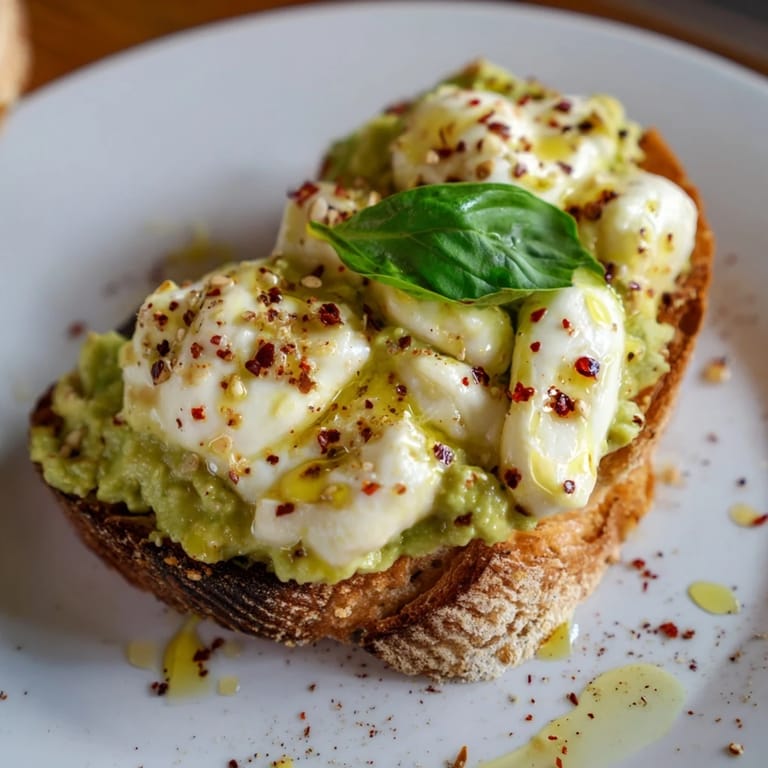
- Spread that smashed avocado generously over your toasted bread, getting it right to the edges. Then arrange your mozzarella slices on top, overlapping them slightly so every bite gets some cheese.
- Broil until bubbly:
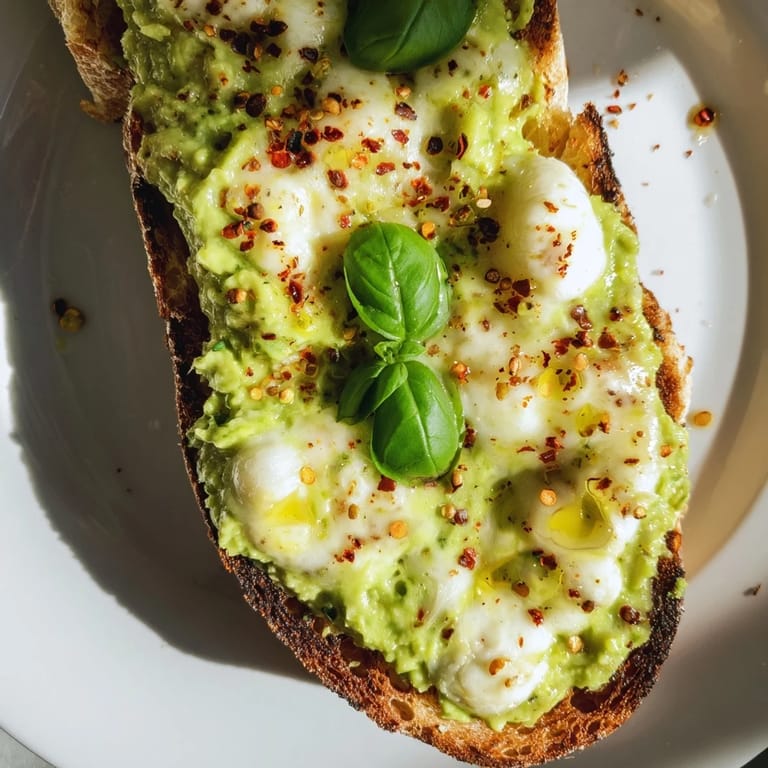
- Place the tartines on a baking tray and slide them under the broiler for 2 to 3 minutes, watching closely because broilers are unforgiving. You want the mozzarella melted and just starting to bubble with a few golden spots forming on top.
- Finish and serve:
- Drizzle with olive oil, tear some basil leaves over the top if you're using them, and add a pinch of red pepper flakes for a little kick. Serve immediately while the cheese is still gooey and the bread is warm.
 Save
Save There was an evening last spring when I made this after a long day and ate it standing at the counter, still in my jacket. The sun was coming through the window at that golden angle, and I remember thinking that sometimes the best meals are the ones you don't plan, the ones you just throw together because you're hungry and it turns out to be exactly what you needed. This tartine has become that for me, a little moment of peace in the middle of whatever chaos the day brought.
Making It Your Own
I've played around with this recipe more times than I can count, and it's remarkably forgiving. Sliced cherry tomatoes on top before you broil add a sweet acidity that brightens everything up, or you can drizzle some balsamic glaze over the finished tartine for a tangy sweetness that feels fancy. Once I cracked a fried egg on top and let the yolk run down into the avocado, and it was so good I almost cried. The base recipe is perfect, but it's also a canvas.
Choosing Your Bread
The bread matters more than you might think. I've used everything from thick-cut sourdough to a rustic whole grain, and each one brings something different to the table. Sourdough has that tangy chew that stands up to the rich toppings, while a softer country loaf makes it feel more delicate and approachable. If you're gluten-free, a sturdy gluten-free artisan bread works beautifully, just make sure it toasts up crisp. Avoid anything too thin or flimsy, because this tartine has weight to it and you need something that can carry it with dignity.
Storage and Timing
This is a dish best eaten the moment it comes out of the oven, when the cheese is still stretchy and the bread hasn't had time to soften. That said, I've prepped the avocado mixture ahead and kept it in the fridge with plastic wrap pressed directly on the surface to keep it from browning, then assembled and broiled it fresh when I was ready. You can toast the bread earlier in the day too, just give it a quick reheat before you start layering.
- If your avocado starts to brown, just scrape off the top layer, the underneath is still perfectly good.
- Leftover mozzarella can be torn into a salad or melted into scrambled eggs the next morning.
- Don't try to reheat a finished tartine, it never tastes the same and the avocado gets sad and watery.
 Save
Save This tartine has saved me on more rushed mornings and lazy evenings than I can count, and I hope it does the same for you. There's something quietly satisfying about making something this good with so little effort.
Recipe FAQs
- → How do I know when the avocado is ripe enough to use?
A ripe avocado should yield slightly to gentle pressure when held in your palm, but not feel mushy. The skin should be dark green or nearly black. If using an underripe avocado, let it sit at room temperature for a day or two before preparing your tartine.
- → Can I prepare this ahead of time?
You can toast the bread and prepare the mozzarella ahead, but assemble and broil just before serving. The avocado and bread will absorb moisture if left sitting together for too long, and the mozzarella loses its ideal texture after cooling.
- → What type of bread works best for tartines?
Rustic country bread, sourdough, or whole grain varieties work wonderfully. Choose bread with a sturdy crumb structure that can support the toppings without becoming soggy. Avoid soft sandwich bread, as it won't hold up to the weight and moisture of the avocado and cheese.
- → How can I prevent the avocado from browning?
The lemon juice in the recipe helps prevent oxidation, but you can also apply it immediately to all cut surfaces. Keep the avocado pit nearby if storing, as it helps slow browning. Assemble your tartine just before broiling for the best color and texture.
- → What are good flavor variations to try?
Add sliced cherry tomatoes, a drizzle of balsamic glaze, crispy prosciutto, or a poached egg on top. Fresh arugula, microgreens, or caramelized onions also pair beautifully. For heat, increase the red pepper flakes or add thinly sliced jalapeños.
- → Is this suitable for a vegetarian diet?
Yes, this tartine is naturally vegetarian, using only avocado, bread, mozzarella, and olive oil as primary ingredients. It's also easily customizable for vegan diets by substituting vegan mozzarella and plant-based spread alternatives.