 Save
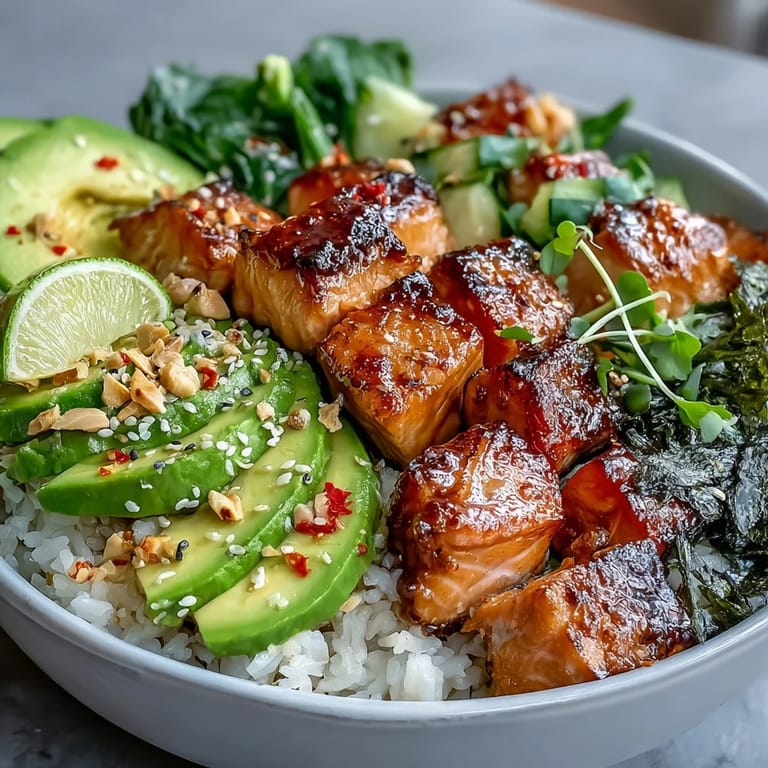
Save Last summer, my friend showed up with a container of leftover sushi rice and a fresh salmon fillet, asking if I could salvage dinner from what she'd grabbed at the market. Instead of reheating everything separately, I grabbed an avocado from my counter, drizzled some chili oil, and tossed it all into a bowl. One bite and we both stopped talking—the creamy avocado against the umami-rich salmon, the heat from the oil, the way the wasabi cleared our sinuses. That bowl became our secret weapon whenever we needed something fast but felt like a celebration.
I made this bowl for my mom on a random Tuesday when she came home exhausted from work, and watching her face when she tasted the combination of chili oil and wasabi with the soft salmon reminded me why I cook. She said it felt fancy but honest, which is exactly what this dish is—no pretense, just bright, bold flavors that somehow feel both light and deeply satisfying.
Ingredients
- Fresh salmon fillet, 250 g, cut into bite-sized cubes: Look for sushi-grade or sashimi-grade if you want peace of mind, though regular salmon works fine since you're cooking it with the marinade. I learned to cut against the natural grain to make the pieces tender rather than stringy.
- Tamari sauce, 2 tbsp: This is the umami backbone of the bowl—it's deeper than regular soy sauce and worth keeping in your pantry. Low-sodium soy works if that's what you have, but tamari feels more intentional here.
- Toasted sesame oil, 1 tsp: A tiny amount goes a long way, and using toasted sesame oil instead of regular adds complexity without overwhelming the salmon.
- Rice vinegar, 1 tsp for marinade plus 1 tbsp for rice: This balances the richness of the oil and avocado, keeping the bowl bright instead of heavy.
- Honey or agave syrup, 1 tsp: Just enough to round out the marinade and prevent the flavors from tasting too sharp or one-dimensional.
- Cooked sushi rice, 200 g: Use short-grain white or brown rice, and if you cook it yourself, the rice vinegar and salt seasoning is what makes it taste like something special rather than just plain rice.
- Avocado, 1 large ripe one: This is texture and creaminess insurance—pick one that yields gently to pressure but isn't mushy, and cut it just before assembly so it doesn't brown.
- Roasted peanuts, 2 tbsp chopped: The crunch is essential, so don't skip this or use raw peanuts—roasted ones have that deep, toasted flavor that anchors the bowl.
- Chili oil, 1 tbsp: This is where you can adjust based on your heat tolerance, and buying a good quality bottle (or making your own) changes everything about how this bowl tastes.
- Wasabi paste, 1 tsp: A small dollop is plenty—it's there to surprise and awaken, not to overpower.
- Nori strips, from 1 sheet: Optional, but they add a salty, umami note and a satisfying chew that makes the bowl feel more intentional.
- Cucumber, 1 small one, thinly sliced: Keeps the bowl fresh and cool, balancing the heat and richness of everything else.
- Spring onions, 2, sliced: These add a gentle sharpness that ties the whole bowl together without making it feel disjointed.
- Toasted sesame seeds, 1 tbsp: Toast your own if you have time—the difference between pre-toasted and store-bought is worth noticing.
Tired of Takeout? 🥡
Get 10 meals you can make faster than delivery arrives. Seriously.
One email. No spam. Unsubscribe anytime.
Instructions
- Build your marinade:
- Whisk together tamari, sesame oil, rice vinegar, and honey in a bowl until the honey dissolves and everything smells rich and complex. The mixture should smell immediately appetizing, like you've captured umami in liquid form.
- Marinate the salmon:
- Toss your salmon cubes into the marinade and let them sit in the fridge for 10 to 15 minutes—this isn't long, but it's enough for the flavors to seep in and slightly cook the outside of the fish. Don't skip this step thinking it won't matter; it absolutely does.
- Season the rice:
- Mix your warm cooked rice with rice vinegar, sugar, and salt in a separate bowl, stirring gently so you don't crush the grains. The rice should taste slightly sweet and tangy, almost like a subtle backdrop rather than something you'd notice on its own.
- Prep all your toppings:
- Slice your avocado, cucumber, and spring onions, chop the peanuts, cut the nori into strips, and have everything ready in little piles on your cutting board. This is the part where mise en place actually matters—once you start assembling, you want to move quickly so the avocado doesn't brown and the rice stays warm.
- Assemble your bowls:
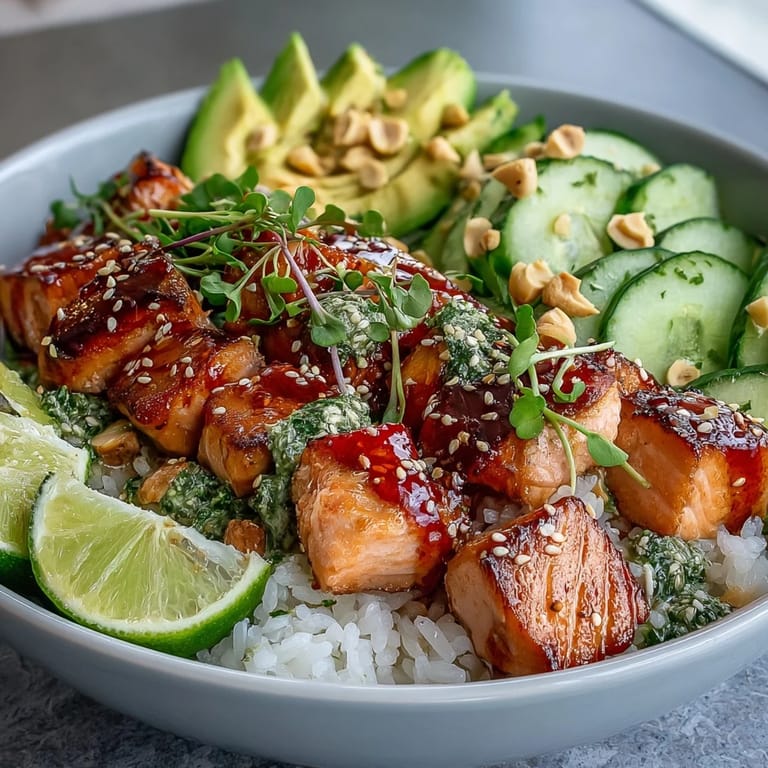
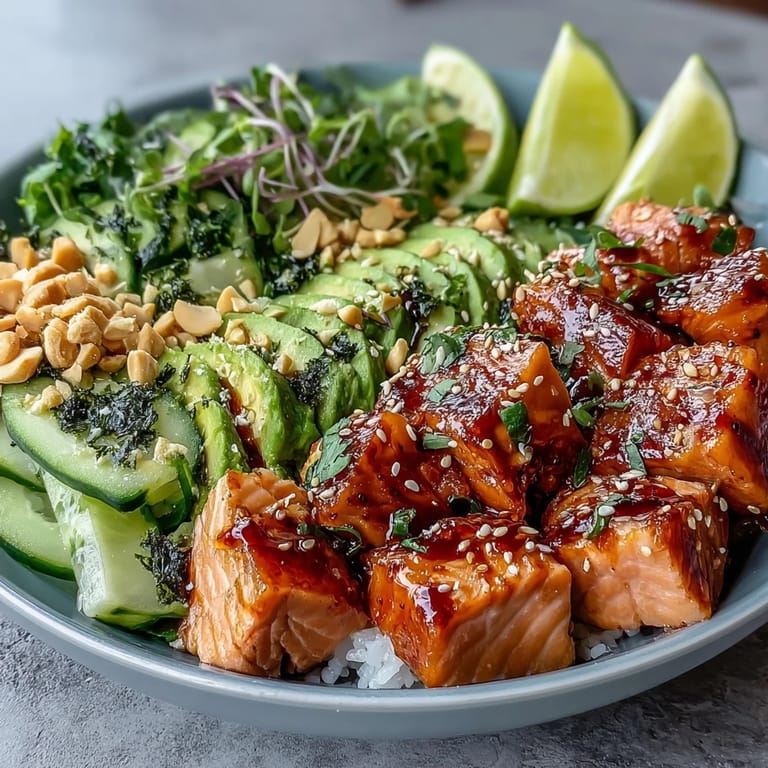
- Divide the seasoned rice between two serving bowls, creating a slight well in the center if you're feeling fancy. Layer the marinated salmon, avocado, cucumber, and spring onions over the rice in whatever arrangement feels natural to you.
- Add heat and finishing touches:
- Drizzle chili oil across the top and dot with small amounts of wasabi paste—you can always add more, but you can't take it back. Sprinkle sesame seeds, nori strips, and peanuts over everything, finish with cilantro or microgreens if you have them, and serve with lime wedges on the side.
 Save
Save My partner made this bowl for me the morning after I came home from a stressful work trip, and something about sitting at the kitchen counter with something this bright and flavorful made everything feel manageable again. Food shouldn't have to heal you, but sometimes it does anyway.
Why the Rice Matters Most
I used to make this bowl with plain rice, and it was fine but forgettable. The moment I started seasoning the rice with vinegar and a touch of sugar, the whole bowl shifted—suddenly it wasn't just components sitting together, it was an actual dish with intention. The warm, slightly sweet rice acts as a bridge between the rich salmon and the sharp wasabi, so don't treat it like a blank canvas that doesn't deserve attention.
Building Layers of Flavor
This bowl works because every element does something different on your palate. The salmon is protein and richness, the avocado is creamy and cooling, the cucumber is fresh and crisp, the sesame is nutty and warm, and then the chili oil and wasabi come in and remind you that this is a bold dish. It sounds complicated on paper, but it's actually just about respect for contrast—let each ingredient have its moment instead of muddying everything together.
Customization Without Apology
This is one of those recipes where swapping things out feels natural rather than wrong. My vegetarian friend makes this with marinated tofu and it's just as satisfying, my sister uses cashews instead of peanuts because she's picky, and my nephew skips the wasabi because he prefers his food less spicy. The core idea—seasoned rice, protein, avocado, heat, crunch, brightness—stays the same, so you're not reinventing the wheel, you're just making it yours.
- Marinate tofu or tempeh for 15 to 20 minutes if you're going vegetarian, and the texture and flavor absorption will rival the salmon version.
- Add pickled ginger or edamame if you want extra texture and umami without changing the basic structure of the bowl.
- Make this bowl your testing ground for different chili oils and heat levels—you'll discover what actually makes your taste buds happy.
 Save
Save This bowl reminds me that the best meals don't need to be complicated, just thoughtful. Make this for someone you care about, or just for yourself when you need to feel like you matter.
Recipe FAQs
- → How long should I marinate the salmon?
Marinate the salmon cubes for 10–15 minutes in the refrigerator. This brief time allows the flavors to penetrate without breaking down the texture of the fish.
- → Can I make this bowl ahead of time?
Prepare the rice and toppings in advance, but assemble the bowls just before serving. The salmon is best cooked fresh, though you can marinate it up to 4 hours ahead.
- → What can I substitute for salmon?
Marinated tofu or tempeh work well for a vegetarian option. You can also use cubed ahi tuna for a poke-style bowl, adjusting cooking time accordingly.
- → Is this bowl spicy?
The heat level is adjustable. Start with less chili oil and wasabi, then add more to taste. The base version offers mild to medium spice depending on your preferences.
- → Can I use regular rice instead of sushi rice?
Short-grain white rice or jasmine rice can work, though sushi rice provides the best sticky texture and authentic flavor. Cook according to package directions and season with vinegar mixture.
- → How do I store leftovers?
Store components separately in airtight containers in the refrigerator for up to 2 days. Keep the salmon, rice, and toppings apart, then reassemble when ready to eat.