 Save
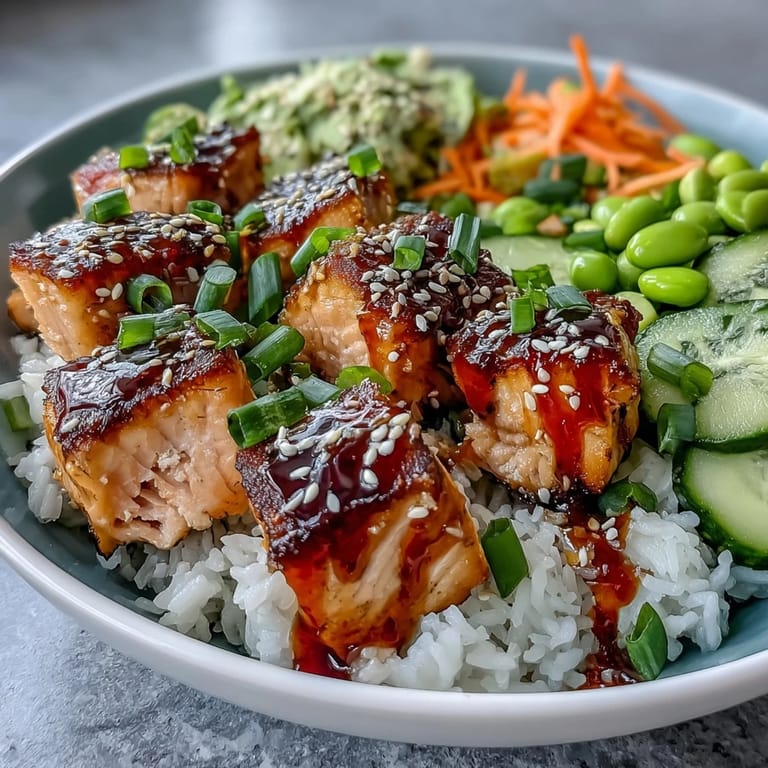
Save There's something quietly satisfying about assembling a rice bowl while the salmon finishes cooking in the oven—the whole kitchen smells like toasted sesame and ginger, and you know dinner is less than thirty minutes away. I discovered this particular combination on a Tuesday when I was tired of the same rotation and just started layering things that felt right: fluffy rice, cubed salmon with a sticky-sweet glaze, and whatever vegetables I had hanging around the crisper. What surprised me was how the warm fish and cool avocado worked together, and how a squeeze of lime at the end made everything sing.
I made this for my sister when she was going through a phase of eating only things she could pronounce, and somehow this bowl of simple, honest ingredients won her over completely. She sat at the counter while I plated everything up, asking questions about the sesame seeds and whether the ginger was spicy, and by the end of dinner she was planning to make it herself. That's when I knew this recipe had staying power—it wasn't fancy, but it felt nourishing in a way that mattered.
Ingredients
- Salmon fillet (500 g), cut into 2 cm cubes: The cubes cook evenly and give you those slightly crispy edges while staying moist inside, and cutting them yourself is cheaper than buying pre-cut portions.
- Soy sauce (2 tbsp): Use tamari if you need gluten-free, and this salty-umami base is what makes the marinade actually taste like something.
- Sesame oil (1 tbsp): A little goes a long way here; it's intensely flavored and adds that toasted depth that makes people ask what the secret ingredient is.
- Honey or maple syrup (1 tbsp): This balances the salt and creates a light glaze on the salmon that caramelizes under the broiler.
- Fresh ginger (1 tsp, grated): Grate it just before using rather than using ground; the bright, spicy kick is noticeably different.
- Garlic (1 clove, minced): Fresh garlic distributes better through the marinade than garlic powder ever could.
- Black pepper (½ tsp): A small amount adds warmth without overwhelming the delicate salmon flavor.
- Jasmine or sushi rice (2 cups): These varieties are slightly sticky and hold together in a bowl better than long-grain varieties.
- Water (3 cups) and salt (½ tsp): The ratio matters for fluffy, not gummy rice, and the salt seasons it from the inside out.
- Cucumber (1 cup, thinly sliced): The cool crunch is essential for textural contrast against the warm fish.
- Shredded carrots (1 cup): They add natural sweetness and a bright color that makes the bowl look alive.
- Edamame (1 cup, shelled and cooked): Buy them frozen and thawed if you're short on time; they're already tender and add protein.
- Avocado (1 whole, sliced): Add this right before serving or it'll brown, and a ripe avocado makes the whole bowl feel indulgent.
- Green onions (2, thinly sliced): These belong mostly as a garnish on top so you get that sharp onion bite in every bite.
- Toasted sesame seeds (2 tbsp): Buy them already toasted; they add a nutty finish and look elegant scattered across the top.
- Sriracha mayo (4 tbsp): Mix it yourself from mayonnaise and sriracha; it's cheaper and you control how spicy it is.
- Soy sauce or tamari (4 tbsp): Use this as a simple alternative sauce if you're not in the mood for mayo-based dressing.
- Pickled ginger (2 tbsp): It's a traditional palate cleanser and adds a sharp, vinegary note that wakes up your taste buds.
- Lime wedges: A squeeze of fresh lime juice at the end is non-negotiable; it brightens everything.
Tired of Takeout? 🥡
Get 10 meals you can make faster than delivery arrives. Seriously.
One email. No spam. Unsubscribe anytime.
Instructions
- Heat your oven and prep your workspace:
- Preheat the oven to 220°C (425°F) and line a baking tray with parchment paper so the salmon won't stick. This high heat is what gives you those golden, slightly caramelized edges that taste infinitely better than pale fish.
- Make the marinade and coat the salmon:
- In a small bowl, whisk together soy sauce, sesame oil, honey, ginger, garlic, and black pepper until the honey dissolves slightly. Add your salmon cubes and stir gently to coat everything evenly; 10 minutes is enough time for the flavors to penetrate without making the fish start to cure.
- Start the rice while salmon rests:
- Rinse your rice under cold running water, stirring gently with your fingers until the water runs mostly clear—this removes excess starch and keeps the grains from clumping. Combine the rinsed rice, water, and salt in a saucepan, bring it to a boil, then reduce heat to low, cover, and let it simmer undisturbed for 12–15 minutes.
- Broil the salmon until cooked through:
- Arrange the marinated salmon cubes in a single layer on your prepared tray and slide it into the hot oven. Broil for 8–10 minutes—you're looking for the edges to turn golden and the centers to be just cooked through; overcooked salmon becomes dry, so set a timer and don't wander far.
- Prepare your fresh vegetables:
- While the salmon cooks, slice the cucumber thin, grate or shred the carrots, thaw the edamame if frozen, slice the avocado, and slice the green onions. Keeping everything prepped means assembly happens in seconds.
- Assemble the bowls:
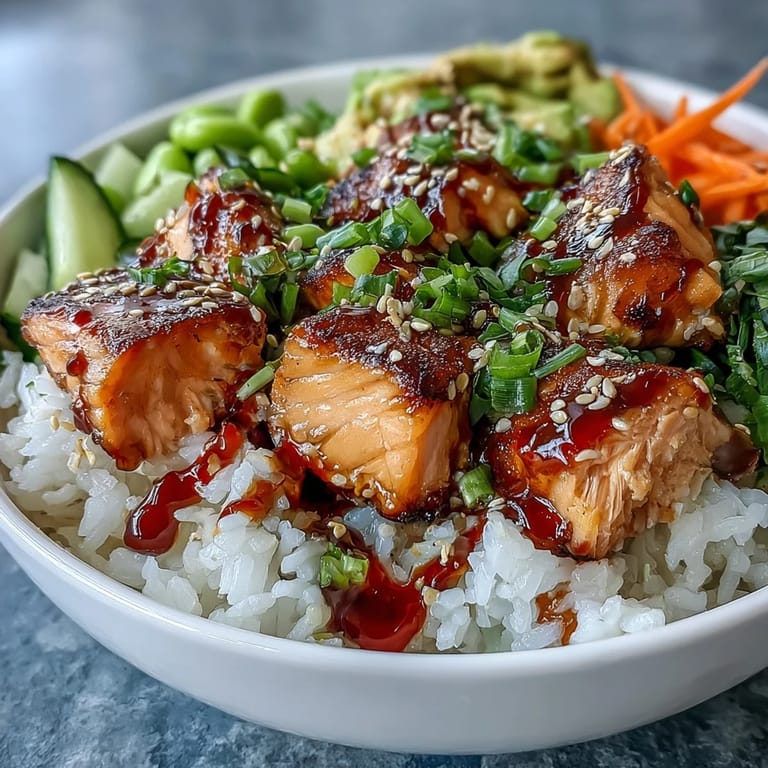
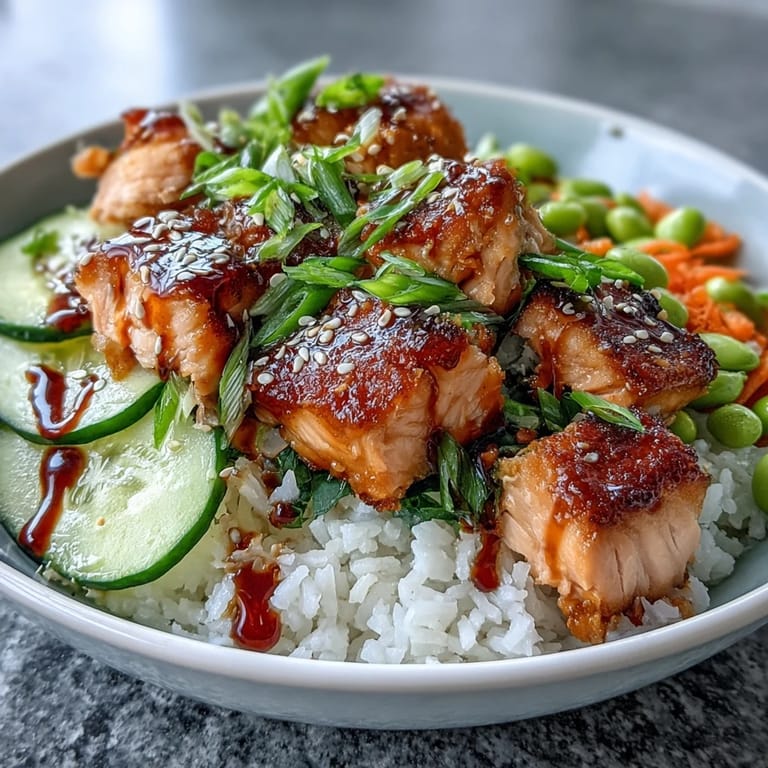
- Divide the fluffy rice among four bowls, then arrange the broiled salmon on top along with the cucumber, carrots, edamame, and avocado slices. Drizzle with your chosen sauce, sprinkle sesame seeds across the top, and add any extra garnishes that appeal to you.
- Serve immediately:
- Bring the bowls to the table with lime wedges on the side so people can squeeze them fresh over the warm rice.
 Save
Save My partner once took a bite and said, 'This tastes like we're eating somewhere expensive,' which made me laugh because we'd spent maybe fifteen minutes and twelve dollars total on the whole thing. That's when I realized this bowl isn't just convenient; it's genuinely good enough to feel like a small celebration on an ordinary evening.
Why the Individual Components Matter
Every element in this bowl has a job. The warm rice is your foundation—it absorbs the marinade drippings from the salmon and becomes more flavorful the moment you add the fish. The raw vegetables stay crisp because they're not tossed while hot, which means you get textural contrast in every spoonful. The salmon, with its fatty richness, is balanced by the brightness of lime and the cool silkiness of avocado. Even the sesame seeds aren't just decoration; they add a subtle crunch and a warm, toasted flavor that ties the whole thing together.
Sauce Strategy
You have flexibility here, which is honestly the best part. Some nights I want the creamy kick of sriracha mayo drizzled generously across everything, and other nights I prefer the simplicity of a soy-ginger sauce that lets the salmon shine. The pickled ginger is there if you want a sharp, vinegary moment between bites, and the lime wedge is always your secret weapon if something tastes flat.
Customization and Variations
This bowl is genuinely adaptable without losing its soul. Swap the jasmine rice for brown rice or quinoa if you want more fiber, or use whatever rice you have on hand. If you're cooking for someone who doesn't eat fish, grilled tofu cubes work beautifully with the same marinade and take the same amount of time. Beyond the vegetables listed, consider adding pickled radish for a sharp crunch, shredded nori seaweed for umami depth, or roasted chickpeas if you want to bump up the protein without changing the whole dish.
- Grilled tofu absorbs the marinade just as well as salmon and makes this easily vegetarian.
- Brown rice, farro, or barley all work as base swaps depending on your mood or dietary preferences.
- Keep pickled vegetables on hand because they add brightness and complexity to any grain bowl you build.
 Save
Save This is the kind of dinner that teaches you something useful every time you make it—whether it's about cooking salmon perfectly, trusting simple ingredients, or discovering that the best meals are often the ones you assemble yourself. Make it once and it becomes part of your regular rotation.
Recipe FAQs
- → Can I use frozen salmon cubes?
Yes, frozen salmon works well. Thaw completely in the refrigerator before marinating, then pat dry with paper towels to remove excess moisture for better browning and flavor absorption.
- → What rice alternatives work best?
Brown rice adds nutty flavor and extra fiber, while quinoa provides complete protein. Cauliflower rice offers a low-carb option. Adjust cooking liquid and time according to your chosen grain's package instructions.
- → How do I store leftovers?
Store components separately in airtight containers—rice, salmon, and vegetables each keep well for 2–3 days. Reheat salmon gently at 160°C (325°F) for 5–8 minutes to maintain moisture, and enjoy vegetables cold or briefly warmed.
- → Can I make this gluten-free?
Absolutely. Replace regular soy sauce with tamari or coconut aminos in both the marinade and as a finishing sauce. Verify all condiments are certified gluten-free, and your bowl becomes completely safe for gluten-sensitive diners.
- → What vegetables can I add?
Shredded red cabbage, bell pepper strips, steamed broccoli florets, snap peas, radish slices, or roasted sweet potato cubes all complement the salmon beautifully. Aim for colorful variety and contrasting textures for the most satisfying bowl experience.
- → Can I grill the salmon instead?
Grilling works wonderfully. Thread marinated salmon cubes onto soaked wooden skewers and grill over medium-high heat for 2–3 minutes per side. The smoky char from grilling adds another dimension to this already flavorful bowl.