 Save
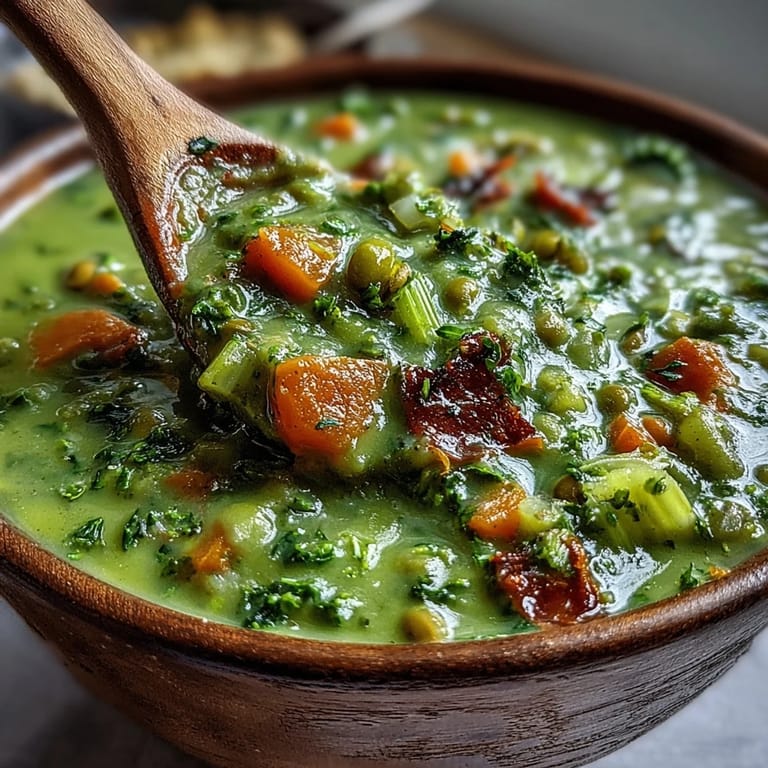
Save My neighbor stopped by on a grey February afternoon with a thermos of split pea soup, and I remember thinking how such a simple bowl could feel like the warmest hug on a cold day. The moment I tasted it—that creamy, earthy richness with just a whisper of smoke—I knew I had to learn how to make it myself. What started as a casual request for her recipe turned into one of those kitchen discoveries that reminds you why comfort food matters. There's something almost meditative about watching those green peas soften into silken creaminess, the whole house filling with the smell of caramelized onions and herbs.
I made this for my daughter's first day of high school, knowing she'd come home exhausted and overwhelmed. She walked in, dropped her backpack, and without saying anything, headed straight to the kitchen where that soup was waiting. We sat at the table together, and between spoonfuls, she started telling me about her teachers, her classmates, the cafeteria drama—all the things bottled up inside. That's when I realized this soup had become our thing, a quiet way of saying everything will be okay.
Ingredients
- Dried split green peas: These are the soul of the soup, transforming from firm little nuggets into creamy clouds of flavor—no soaking needed, just a quick rinse to remove dust.
- Onion, carrots, and celery: This classic trio builds the flavor foundation, and taking five minutes to let them soften together is where the magic begins.
- Garlic: Just two cloves, minced fine, give the whole pot an aromatic depth that makes people ask what you're cooking from three rooms away.
- Potato: Diced into small pieces, it dissolves partially into the soup, adding body and creaminess without any dairy.
- Bay leaf and thyme: These dried herbs are your friends—they add earthiness and a subtle sophistication that transforms simple ingredients into something special.
- Vegetable broth: The liquid foundation that lets everything else shine; use good quality broth because it truly matters here.
- Olive oil: Just a tablespoon to start the sauté, nothing fancy needed.
- Smoked ham or ham bone: Optional but traditional, adding a savory smoke that makes vegetarians jealous—if you skip it, smoked paprika does the job beautifully.
- Salt and black pepper: Final seasoning adjustments that you'll make at the end, tasting as you go.
Tired of Takeout? 🥡
Get 10 meals you can make faster than delivery arrives. Seriously.
One email. No spam. Unsubscribe anytime.
Instructions
- Build your flavor base:
- Warm the olive oil in a large pot over medium heat, then add your diced onion, carrots, and celery. Let them soften for about five minutes, stirring occasionally—you're not looking for color, just tender vegetables that release their sweetness into the oil.
- Wake up the garlic:
- Stir in your minced garlic and cook for just one minute until it becomes fragrant and golden. This brief moment is crucial—too long and it turns bitter, too short and you miss its aromatic gift.
- Combine everything:
- Add the rinsed split peas, diced potato, bay leaf, thyme, and broth to the pot. If you're using ham or a ham bone, add it now and give everything a gentle stir to combine.
- Simmer until transformed:
- Bring the pot to a boil, then immediately lower the heat and cover it. Let it simmer gently for about an hour, stirring every fifteen minutes or so—this prevents the peas from sticking to the bottom and helps them break down evenly. The soup is ready when the peas have completely softened into the broth.
- Remove solids and adjust texture:
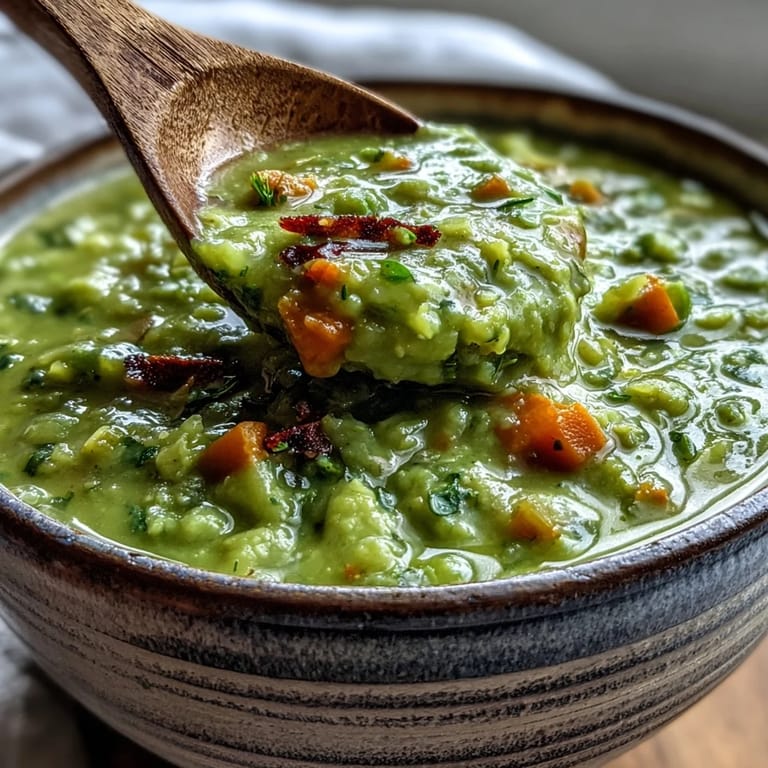
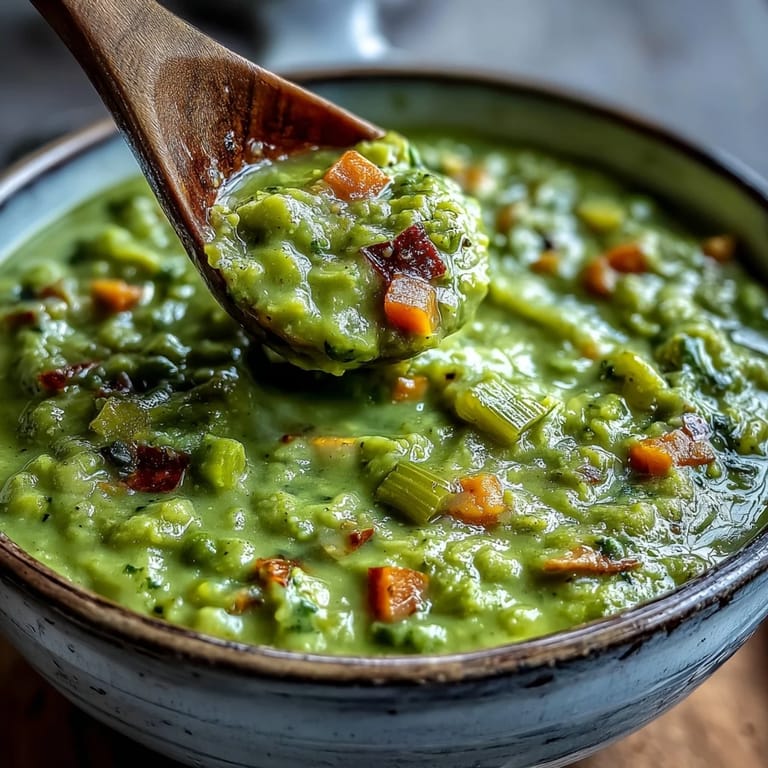
- Fish out the bay leaf and ham bone (if used). If you're using diced ham, stir it back in now. For a creamier soup, use an immersion blender to gently puree just part of the mixture—this keeps some texture while adding richness—or blend half in a regular blender and return it to the pot.
- Season to perfection:
- Taste your soup and add salt and pepper until it tastes like home. Remember that the broth likely has salt, so go slowly and taste between additions.
 Save
Save One morning, I overheard my partner on the phone with his mother, and he was describing my split pea soup in detail—the color, the flavor, how it reminded him of her kitchen. I pretended not to listen but kept stirring, smiling quietly into the steam. He never asked for this soup; it just started appearing on nights when he seemed tired or stressed, and somehow that became its own kind of conversation.
The Magic of Slow Simmering
There's something about letting a pot bubble away quietly on the stove that feels restorative, even while you're doing the cooking. The transformation happens gradually—at twenty minutes it's still brothy, at forty it starts becoming something thicker, and by the full hour mark those peas have nearly melted into the background. I learned to trust this process by accident, once trying to rush it with higher heat, only to end up with mushier peas and less developed flavor. Now I use those simmering minutes to sit with a cup of tea, read something, or just listen to the gentle sounds of the kitchen doing its work.
Making It Your Own
This soup is wonderfully forgiving and actually improves with personalization. Some people add a splash of apple cider vinegar at the end for brightness, others swear by a pinch of smoked paprika even if they're using ham. I've seen versions with leeks instead of onions, or with diced tomatoes stirred in just before serving. The beauty is that split pea soup holds up to experimentation while still tasting unmistakably like itself.
Storage and Serving Suggestions
This soup tastes even better the next day after the flavors have had time to marry together, making it perfect for batch cooking. Store it in an airtight container in the refrigerator for up to four days, or freeze portions in mason jars for up to three months. When you reheat it, you'll definitely need to add a splash of water or broth since it will have thickened considerably.
- Serve each bowl with a thick slice of toasted crusty bread for soaking up every spoonful.
- A dollop of sour cream or Greek yogurt on top adds a cool contrast to the warm, earthy soup.
- Crumbled crispy bacon or a sprinkle of fresh parsley transforms leftovers into something that feels brand new.
 Save
Save This soup has become part of my rhythm, something I make when I want to slow down or when the people I love need quiet comfort. It's taught me that the best dishes aren't always complicated—sometimes they're just honest, made with attention and served with warmth.
Recipe FAQs
- → Do I need to soak split peas before cooking?
No soaking required for split peas. Unlike dried beans, split peas naturally break down during cooking. Simply rinse them thoroughly and add directly to your pot.
- → How can I achieve a smoky flavor without ham?
Add 1-2 teaspoons smoked paprika when sautéing vegetables. Liquid smoke works well too—start with 1/4 teaspoon and adjust to taste. Both methods deliver authentic smokiness for vegetarian versions.
- → Why is my soup too thick?
Split peas continue absorbing liquid as they cool. Simply thin with warm water or broth when reheating. Start with 1/2 cup and add more until reaching desired consistency.
- → Can I freeze this soup?
Absolutely. Cool completely, then transfer to freezer-safe containers leaving 1 inch of headspace. Freeze up to 3 months. Thaw overnight in refrigerator before reheating.
- → What's the best way to puree the soup?
An immersion blender directly in the pot works beautifully for partial pureeing. For smoother results, transfer batches to a countertop blender, or use a potato masher for rustic texture with visible vegetable pieces.
- → How do I know when split peas are fully cooked?
Taste test—peas should be completely tender with no gritty center. They typically dissolve into the broth after 60-75 minutes of simmering, creating that characteristic creamy thickness.