 Save
Save There's a particular afternoon I won't forget—my neighbor Maria stopped by with an armful of zucchini from her garden, the kind of abundance that only happens in late summer. I had half a pot of vegetable broth already simmering and a handful of pantry staples, so we decided right there to build something together. That soup taught me that minestrone isn't really a single recipe so much as an invitation to use what's around you, to make something warm and honest out of whatever the season offers.
I made this soup for my dad during his first winter back from living abroad, and I watched him close his eyes after that first taste. He said it reminded him of something his mother used to make, though I'd never heard him mention it before. That's when I understood that food carries its own kind of memory, separate from our own—it arrives as both familiar and entirely new.
Ingredients
- Olive oil: Use a decent quality one you actually enjoy tasting, because it matters here in a way that's noticeable rather than hidden behind other flavors.
- Onion and garlic: These are your flavor foundation, and taking a full two to three minutes to let them soften and turn translucent makes all the difference in the finished soup's depth.
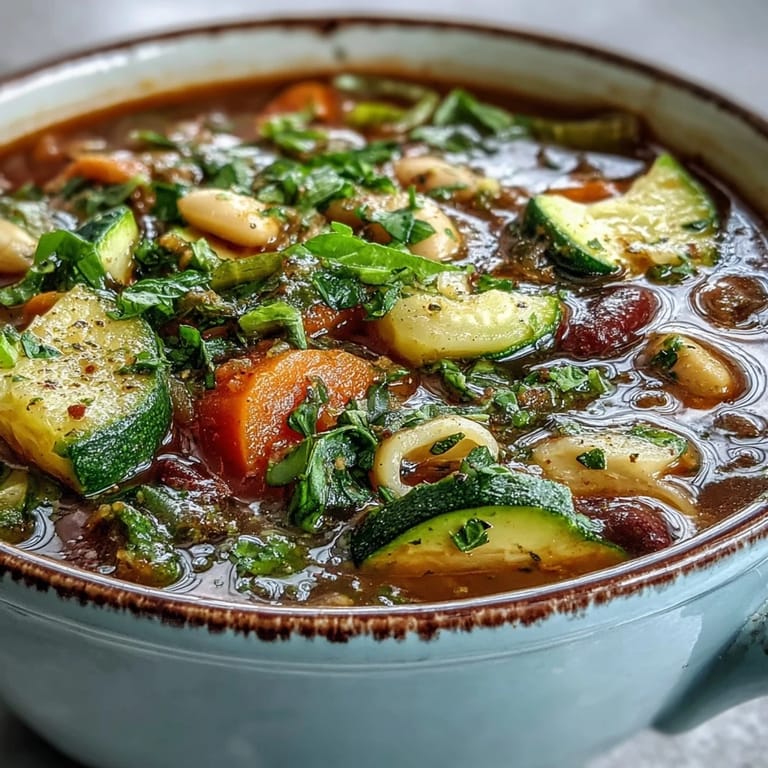
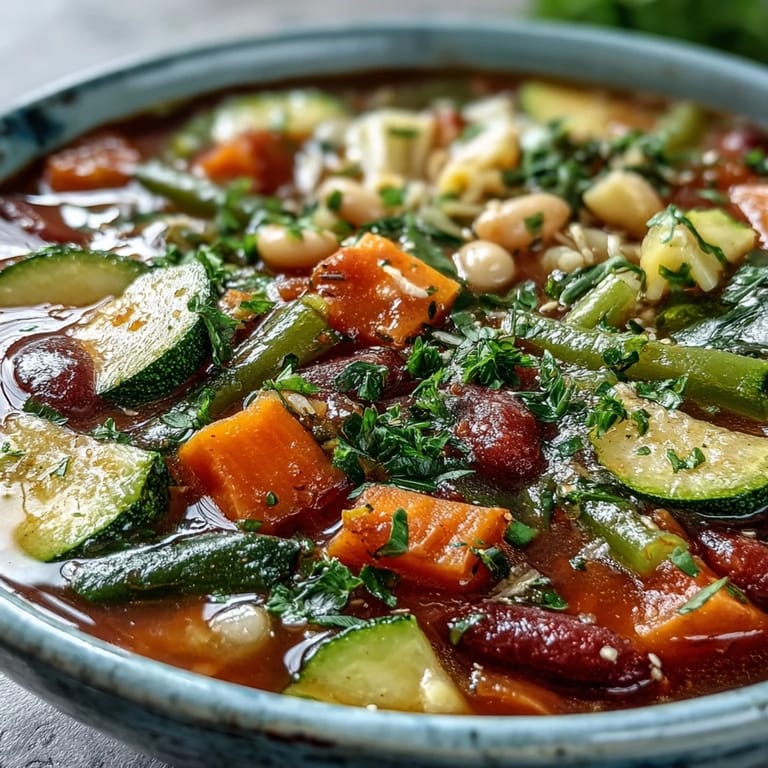
- Carrots, celery, and zucchini: The holy combination that gives minestrone its character—don't skip the celery, which adds a subtle earthiness people never quite identify but always taste.
- Potato: This thickens the broth naturally as it breaks down, so you don't need cream or anything else to get that satisfying texture.
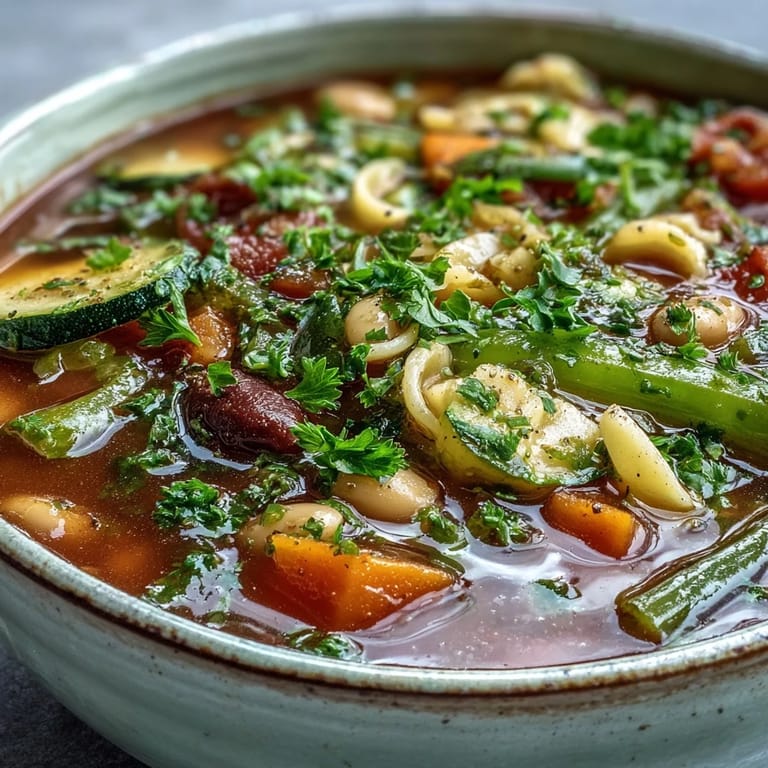
- Green beans: They stay bright and slightly firm if you time it right, which keeps the whole soup from feeling like one uniform mush.
- Diced tomatoes: Canned is genuinely better here than fresh because the acidity and depth are exactly what you need, and they give you their liquid as bonus flavor.
- Vegetable broth and water: The water keeps it from tasting one-note, allowing the vegetables to speak instead of the broth dominating.
- Cannellini beans: Creamy and mild, they add substance and protein without overwhelming the other flavors the way bolder beans might.
- Small pasta: Ditalini or elbow macaroni work best because they don't get lost but also don't overshadow the vegetables—choose whichever you have on hand.
- Oregano and basil: The dried herbs go in early to marry with the broth, while the fresh herbs wake everything up at the very end.
- Bay leaf: It's quiet but it's essential; it adds an almost impossible-to-name polish that people notice even if they can't say what it is.
- Fresh parsley: This is non-negotiable at the end—it brings everything into focus the way a final instrument entering an orchestra does.
- Parmesan: Not required but absolutely worth the small effort, especially if you shave it fresh rather than using pre-grated.
Tired of Takeout? 🥡
Get 10 meals you can make faster than delivery arrives. Seriously.
One email. No spam. Unsubscribe anytime.
Instructions
- Start with warmth and fragrance:
- Heat your oil over medium until it shimmers, then add the onion and garlic. You're listening for a gentle sizzle and waiting for that moment when the kitchen fills with a smell that makes you want to stay right here. Two to three minutes and they'll turn soft and golden.
- Build your vegetable base:
- Add all the harder vegetables—carrots, celery, zucchini, potato, and green beans. Let them sauté for five to six minutes, stirring now and then, until the edges start to soften slightly and everything smells even better. This step matters because it allows the vegetables to release some of their water and flavor before the broth arrives.
- Bring it all together:
- Pour in the tomatoes with their juice, then the broth and water. Scatter in the oregano, basil, and bay leaf, season with salt and pepper, and bring the whole thing to a boil. The moment you see it bubbling, turn the heat down.
- Let time do the work:
- Cover the pot and simmer for fifteen minutes, letting the vegetables soften and the flavors get to know each other. You can step away during this time, though the aroma might keep pulling you back to the kitchen.
- Finish with beans and pasta:
- Uncover, add the drained beans and pasta, and let it simmer uncovered for ten to twelve minutes until the pasta is tender and the beans have warmed through. Stir it once or twice and taste as you go—this is your moment to adjust the salt and pepper to exactly where you want them.
- Wake it up with fresh herbs:
- Fish out the bay leaf, then stir in the fresh parsley and basil. The smell of fresh herbs hitting warm soup is something that never gets old, and you'll taste the difference immediately.
- Serve it with intention:
- Ladle it into bowls and finish with a scatter of Parmesan if you're using it. A crack of black pepper on top is never wrong. Serve it hot, with crusty bread if you have it.
 Save
Save My sister brought this soup to a family dinner when she was eight months pregnant and couldn't sleep, so she cooked at two in the morning instead. Everyone ate it with an almost reverent quiet, and afterward, she said making something that nourished people had settled something in her that anxiety never could. That's when I learned that minestrone isn't just about feeding hunger—it's about feeding the person doing the cooking too.
When to Make This
This soup belongs in any season, but it shines brightest when you're caught between weather—those shoulder months when your body can't decide what it needs. It's substantial enough for a cold evening but light enough for early summer, and it invites you to pay attention to whatever vegetables are good right now. I've made it in January with root vegetables stored from autumn, and I've made it in August when tomatoes and basil were practically falling off the vine.
How to Make It Your Own
The beauty of minestrone is that it doesn't require your absolute obedience. Spinach, kale, or cabbage work beautifully if you'd rather use those than zucchini. Some cooks add a rind of Parmesan cheese while it simmers, which gives it an even deeper savory note. If you want something heartier, a bit of pancetta sautéed with the onions turns it into something almost entirely different while still feeling authentic.
For a vegan version, skip the Parmesan entirely or use a plant-based alternative—the soup stands on its own without it. Some people add a small splash of balsamic vinegar at the very end, which adds a subtle sweetness and complexity that's quietly beautiful. Don't be afraid to taste constantly and adjust the seasonings; this is your soup, and it should taste exactly how you want it to.
Storing and Serving
Minestrone actually improves overnight as the flavors continue to marry and deepen, making it an excellent candidate for batch cooking. It keeps in the refrigerator for up to four days in a covered container, and it freezes beautifully for up to three months. When you reheat it, the pasta will have absorbed more liquid, so you'll almost always want to add back a cup or two of broth or water to get it back to the consistency you started with.
- Serve it with a grind of fresh black pepper and a handful of grated Parmesan for texture and richness.
- Pair it with crusty bread for soaking up the broth, or croutons if you want something with a bit more crunch.
- A small glass of red wine on the side—Chianti, as tradition suggests, or whatever you have—completes the experience in the simplest way.
 Save
Save This soup has a way of arriving exactly when someone needs it, whether that's because it's cold outside or because their day was long. Make a big pot and you'll have something warm waiting for you all week, a small gift you gave yourself without really thinking about it.
Recipe FAQs
- → Can I make minestrone in advance?
Absolutely. This soup actually tastes better the next day as flavors have time to meld. Store in the refrigerator for up to 4 days, adding pasta just before serving if you prefer it al dente.
- → What vegetables work best in minestrone?
Traditional versions use carrots, celery, zucchini, and green beans, but you can adapt based on season. Spinach, kale, cabbage, or bell peppers all work beautifully in this versatile soup.
- → Is minestrone suitable for freezing?
Yes, though it's best to freeze without the pasta. Cook pasta separately when reheating to prevent it from becoming mushy. The soup base freezes well for up to 3 months.
- → How do I make this vegan?
Simply skip the Parmesan garnish or use a plant-based alternative. The rest of the soup is naturally vegan, packed with protein from beans and hearty vegetables.
- → What type of pasta should I use?
Small shapes like ditalini, elbow macaroni, or shells work best as they fit easily on a spoon. For gluten-free versions, choose rice or corn-based pasta in similar small shapes.
- → Can I add protein beyond beans?
Traditional Italian versions sometimes include pancetta or bacon sautéed with onions. You could also add shredded chicken or serve with extra beans for a protein boost.