 Save
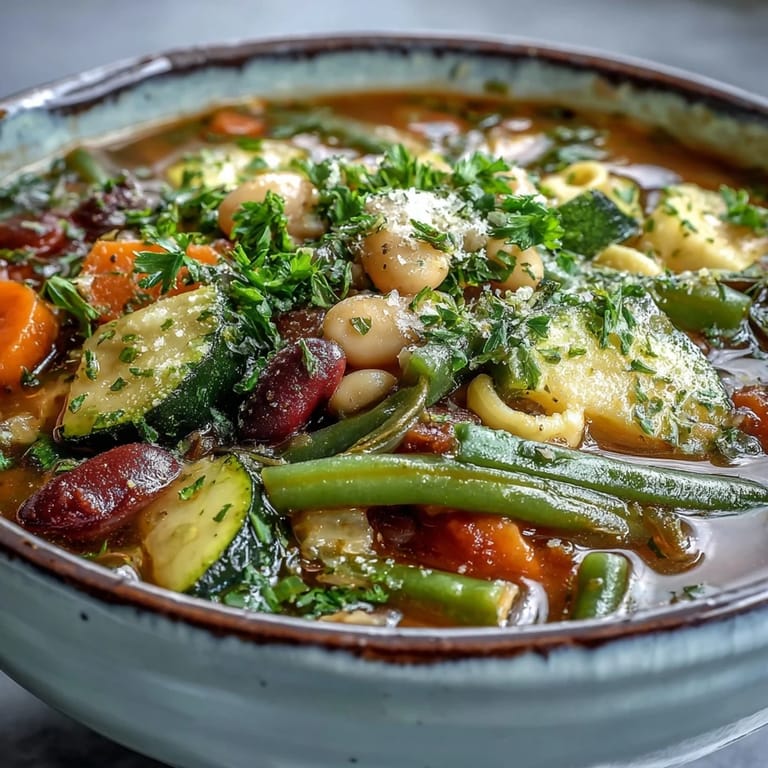
Save My neighbor Maria taught me that minestrone isn't really a recipe—it's a conversation between what's in your garden and what's in your pantry. Years ago, she'd toss together whatever vegetables needed using before the season changed, always keeping a can of beans and some pasta on hand. Watching her move through the kitchen without measuring, just tasting and adjusting, I realized this soup was less about perfection and more about generosity. It became the dish I make when I want to feed people without fuss, when the kitchen feels warm but not frantic, and when I remember that the best meals are the ones that happen naturally.
I made this for my sister's family last January when they were snowed in, and something clicked—watching three kids ask for seconds without being nudged told me everything about whether a recipe actually works. There's something about a big pot of soup that makes people linger at the table longer, talking more, relaxing into the evening in a way that fancier food never quite manages.
Ingredients
- Olive oil: Use good quality here because it's one of the few things you'll actually taste distinctly, and it makes the soffritto smell like an Italian kitchen.
- Yellow onion, carrots, and celery: This trinity is the flavor backbone, and taking five minutes to sauté them properly means your soup will taste like comfort instead of just hot vegetable water.
- Garlic: Mince it fine so it distributes throughout instead of leaving chunks that catch people off guard.
- Zucchini and potato: The potato gives body and a subtle sweetness that rounds everything out beautifully.
- Green beans: These stay slightly firm if you don't overcook them, giving the soup pleasant texture variation.
- Canned diced tomatoes: Don't skip this—the acidity brightens the whole thing and prevents it from tasting flat.
- Cannellini beans: Drain and rinse them well to remove the starchy liquid that can cloud your broth.
- Small pasta like ditalini: Tiny shapes work better than large pasta because they distribute evenly and cook at the same pace as everything else.
- Vegetable broth: The quality here matters more than you'd think—a thin or salty broth will undermine everything else.
- Dried Italian herbs: A combination of oregano, basil, and thyme creates layers without needing to hunt for fresh herbs.
- Bay leaf: It adds a subtle earthiness that's hard to identify but impossible to ignore if it's missing.
- Baby spinach or kale: Add it at the very end so it wilts from the heat without turning into flavor-less mush.
- Fresh parsley: This is your finishing touch that makes people think you fussed more than you actually did.
- Parmesan cheese: Optional but honestly it changes everything—the sharp saltiness against the gentle broth is the reason to serve bowls instead of mugs.
Tired of Takeout? 🥡
Get 10 meals you can make faster than delivery arrives. Seriously.
One email. No spam. Unsubscribe anytime.
Instructions
- Build your flavor base:
- Heat olive oil over medium and add the onion, carrots, and celery—you'll know they're ready when the onion turns translucent and the kitchen starts smelling like dinner. This five-minute step is where your soup gains its soul.
- Deepen with more vegetables:
- Stir in garlic, zucchini, potato, and green beans, letting them toast slightly for three minutes so their individual flavors intensify before they soften into the broth.
- Bring it together:
- Add tomatoes, beans, broth, herbs, and bay leaf, then bring the whole thing to a rolling boil so you know everything's heating properly.
- Let it simmer gently:
- Lower the heat, cover partially, and let it bubble quietly for twenty minutes—this is when vegetables actually become tender rather than just warm and hard.
- Finish with pasta:
- Stir in your small pasta and cook uncovered for eight to ten minutes, stirring occasionally so nothing sticks to the bottom and everything cooks evenly.
- Wilt in the greens:
- Add spinach or kale after the pasta is tender, letting them soften for just two minutes so they stay bright instead of turning gray.
- Season and taste:
- Remove the bay leaf and adjust salt and pepper—taste as you go because you're the one who knows what you're eating.
- Serve with intention:
- Ladle into bowls, finish with fresh parsley and Parmesan if you're using it, and maybe add a drizzle of good olive oil if you're feeling generous.
 Save
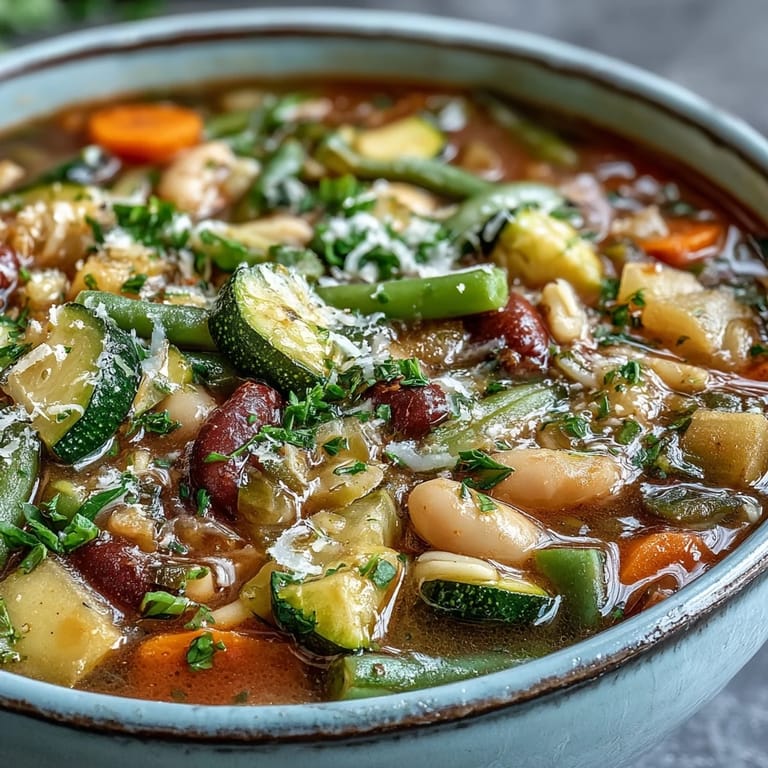
Save There was an afternoon when my daughter brought a friend home from school, and without planning anything, I had minestrone ready—the kind of moment that made me understand why Italian families built their lives around soup. Something shifted in the kitchen that day, a feeling that hospitality doesn't require fancy planning, just readiness and attention.
When to Make This
This soup works year-round but feels especially right when you want something warming and there's no time for elaborate cooking. It's perfect for using up vegetables before they turn in your crisper drawer, and it actually tastes better the next day after flavors have mingled overnight. Make it on Sunday and you've got lunch sorted for days.
Variations That Actually Work
The beauty of minestrone is that it's not precious—add whatever vegetables you have and they'll belong there. In autumn I've added diced butternut squash, in late spring fresh peas appear, and in summer I bump up the zucchini. The only rule is that you taste as you adjust because different vegetables contribute different amounts of flavor and texture.
Kitchen Wisdom
I learned years ago that cooking for people you care about doesn't mean following rules perfectly—it means paying attention. This soup teaches that lesson quietly because it's forgiving enough for mistakes but good enough that people notice when you've made it with care. The act of building layers of flavor, tasting, adjusting, and then serving something warm is where the real cooking happens.
- Save a Parmesan rind and toss it in while simmering for an umami depth that feels like a secret ingredient.
- If you're feeding someone picky, keep the vegetable pieces slightly larger so they can work around what they don't love.
- Serve with crusty bread and you've given people permission to stay at the table a little longer.
 Save
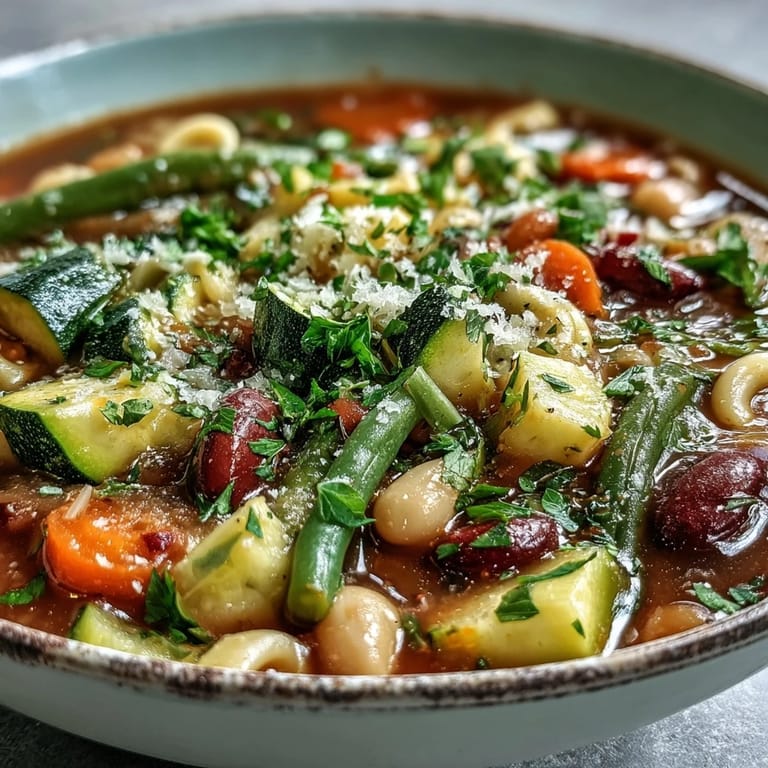
Save Make this when someone needs feeding, when you're tired but want to give something real, or when you just want the kitchen to smell like home. That's really all minestrone asks of you.
Recipe FAQs
- → Can I make this minestrone soup ahead of time?
Yes, minestrone actually tastes better the next day as the flavors meld together. Store it in an airtight container in the refrigerator for up to 4 days. Note that the pasta will absorb liquid over time, so you may need to add extra broth when reheating.
- → What type of pasta works best for minestrone?
Small pasta shapes work best, such as ditalini, elbow macaroni, small shells, or tubetti. These hold up well in the broth and are easy to eat with a spoon. For gluten-free versions, use your favorite gluten-free small pasta.
- → Can I substitute or add different vegetables?
Absolutely! Minestrone is very flexible. You can add cabbage, peas, bell peppers, or butternut squash. Use whatever seasonal vegetables you have on hand. Just maintain similar cooking times by adding harder vegetables earlier and delicate greens at the end.
- → How do I make this soup vegan?
This soup is naturally vegan-friendly if you omit the Parmesan cheese garnish. All other ingredients are plant-based. For added richness, you can stir in a tablespoon of nutritional yeast or top with vegan parmesan alternative.
- → Can I freeze minestrone soup?
Yes, but it's best to freeze it without the pasta. Cook the soup through step 4, cool completely, and freeze for up to 3 months. When ready to serve, thaw, reheat, and add fresh pasta during the final cooking stage for best texture.
- → What can I serve with minestrone?
Minestrone pairs beautifully with crusty Italian bread, garlic bread, or focaccia for dipping. A simple green salad with vinaigrette makes a nice side. For a traditional Italian experience, serve with a glass of Chianti or Sangiovese wine.