 Save
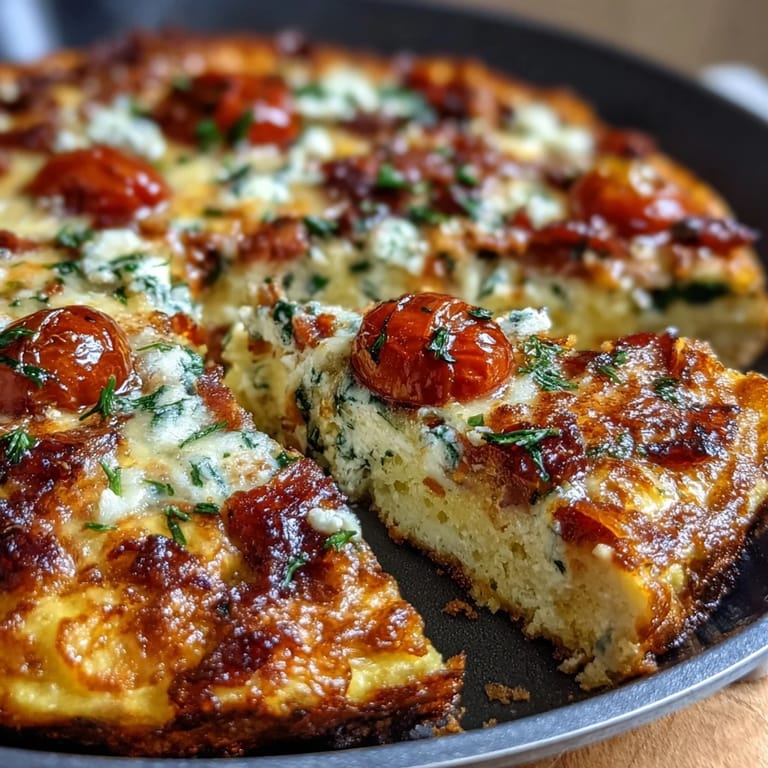
Save Sunday mornings at my parents' house always smelled like butter and eggs sizzling in cast iron, but it wasn't until I was standing in my own kitchen on a hectic Tuesday that I truly understood the magic of a frittata. I'd grabbed some leftover ham, a handful of spinach about to wilt, and half a block of cheddar, threw them into a skillet with beaten eggs, and twenty-five minutes later had six perfect wedges ready to go. That one-pan wonder became my answer to the question I'd been asking all week: how do I feed myself something actually good when time feels impossible?
I made this for my roommate once when she'd pulled an all-nighter studying, and watching her face when she realized she could eat a full, protein-packed breakfast without thinking reminded me that sometimes the simplest dishes do the most for people. She ate two slices standing up at the counter, then wrapped the rest in foil and took it to her afternoon class. That's when I knew this recipe had staying power.
Ingredients
- 8 large eggs: Room temperature eggs blend more smoothly, and you'll notice the difference in how evenly they cook throughout the pan.
- 1/4 cup whole milk: This keeps the eggs tender and slightly custardy rather than rubbery, though you can swap it for cream if you want something richer.
- 1 cup shredded cheddar cheese: Sharp cheddar brings more flavor than mild, and shredding it yourself means it melts more evenly than pre-packaged.
- 1/4 cup grated Parmesan cheese: The salty, nutty notes keep the frittata from tasting one-dimensional and add a subtle sophistication.
- 1 cup diced cooked ham: Use quality ham if you can; cheap stuff gets stringy and sad in the oven.
- 1 cup baby spinach, chopped: Chop it roughly so it distributes through the eggs without disappearing completely.
- 1/2 cup cherry tomatoes, halved: They burst slightly during cooking and add tiny pockets of brightness that make each bite interesting.
- 1/4 cup finely chopped red onion: Raw red onion has a sharp bite, but a quick sauté mellows it into something sweet and almost caramel-like.
- 1/2 tsp salt, 1/4 tsp black pepper, 1/4 tsp garlic powder: Don't skip seasoning the egg base itself; it makes everything taste more intentional.
- 1 tbsp fresh chives, chopped (optional): A sprinkle at the end adds a fresh onion whisper that makes people ask what your secret is.
- 2 tbsp olive oil: Good olive oil helps prevent sticking and brings a subtle flavor that rounds out the savory notes.
Tired of Takeout? 🥡
Get 10 meals you can make faster than delivery arrives. Seriously.
One email. No spam. Unsubscribe anytime.
Instructions
- Heat your oven and gather your team:
- Set the oven to 375°F and get your oven-safe skillet ready on the counter. Having everything in sight before you start means you won't be fumbling around once the eggs are in motion.
- Whisk the egg base until it's smooth and ready:
- Crack your eggs into a bowl, pour in the milk, and whisk with a fork until you don't see any streaks of white or yolk. This takes about a minute and makes a real difference in how evenly things cook.
- Fold in the cheese like you're being gentle with it:
- Stir the cheddar and Parmesan into the eggs so it's distributed but not overworked. The cheese will melt more evenly if you're not too aggressive.
- Sauté the onion until it softens and smells sweet:
- Heat the olive oil in your skillet over medium heat and add the red onion. You'll know it's ready in about two minutes when it starts to look a little translucent and smells almost sweet instead of sharp and raw.
- Build your filling layer:
- Add the diced ham, spinach, and cherry tomatoes to the pan and stir gently for a minute or two. You're not looking to cook these through; you just want them warm and distributed.
- Pour the eggs over everything like you're tucking them in:
- Slowly pour the egg mixture into the pan and use a spatula to gently push it around so the filling doesn't all sink to one side. A few gentle swirls make the final slice look intentional.
- Get the edges going on the stovetop:
- Let it cook on medium heat for two to three minutes until you can see the very edges starting to pull away from the pan and look a little set. This helps the bottom cook evenly once it hits the oven.
- Transfer to the oven and let the heat finish the job:
- Slide the whole skillet into the preheated oven and set a timer for fifteen to eighteen minutes. You're looking for the center to look just barely set, not jiggly, with a light golden top.
- Rest it before you cut:
- Pull the skillet out and let it sit for five minutes. This pause lets everything set up just enough to slice cleanly without falling apart.
- Slice, garnish, and serve warm or cold:
- Cut it into six wedges, sprinkle chives on top if you're using them, and serve immediately or let it cool for meal prep. Both versions taste honestly wonderful.
 Save
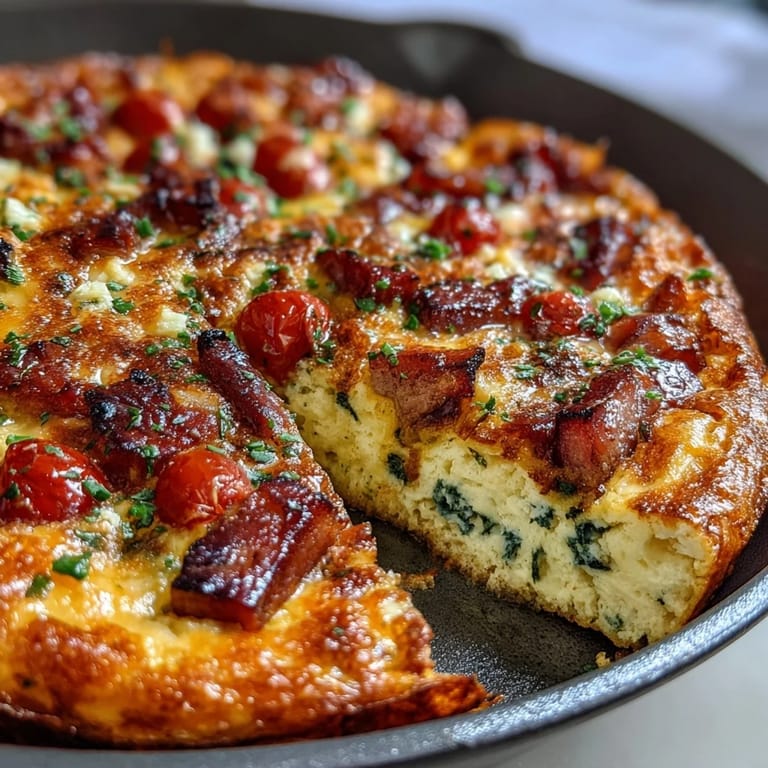
Save The first time I made this for someone other than myself, it was for a friend going through a rough patch who needed easy, good food that didn't require her to think too hard. I'd packaged four wedges in a glass container, and three days later she texted me a photo of the last slice with a heart emoji. That's when I stopped thinking of this as just a breakfast and started seeing it as something that could actually matter.
Swaps and Variations That Actually Work
The beauty of a frittata is that it's endlessly flexible without losing its soul. I've made versions with Swiss cheese instead of cheddar, which brings a nuttier, almost subtle elegance, and others with feta, which adds a tangy sharpness that completely changes the mood. Bell peppers are wonderful if you chop them small and sauté them with the onion, and mushrooms, especially cremini or shiitake, add an earthy depth that pairs beautifully with ham. The structure stays the same; only the details shift.
What to Serve It With
A frittata is satisfying on its own, but pairing it with something bright and crisp makes it feel more intentional. A simple green salad with lemon vinaigrette cuts through the richness, or thick slices of toasted bread become a vehicle for butter and the eggs themselves. I've also served it alongside fresh fruit, which sounds odd until you taste how the sweetness and acidity balance everything else on the plate.
Making It a Meal Prep Powerhouse
This is one of those recipes that actually gets better when you're thinking ahead. Make it on Sunday, cool it completely, and slice it into wedges before storing in an airtight container; it'll keep for up to four days and tastes nearly as good cold as it does warm. Microwave a wedge for thirty seconds in the morning, crack some black pepper on top, and you've got breakfast that took zero effort despite being homemade and intentional. This is the kind of quiet win that makes busy weeks feel slightly more manageable.
- Cool the frittata completely before slicing and storing, or condensation will make it soggy.
- Individual wedges reheat faster and more evenly than trying to warm the whole thing.
- Eat it straight from the fridge if you're in a rush, because cold frittata is genuinely delicious and needs no apologies.
 Save
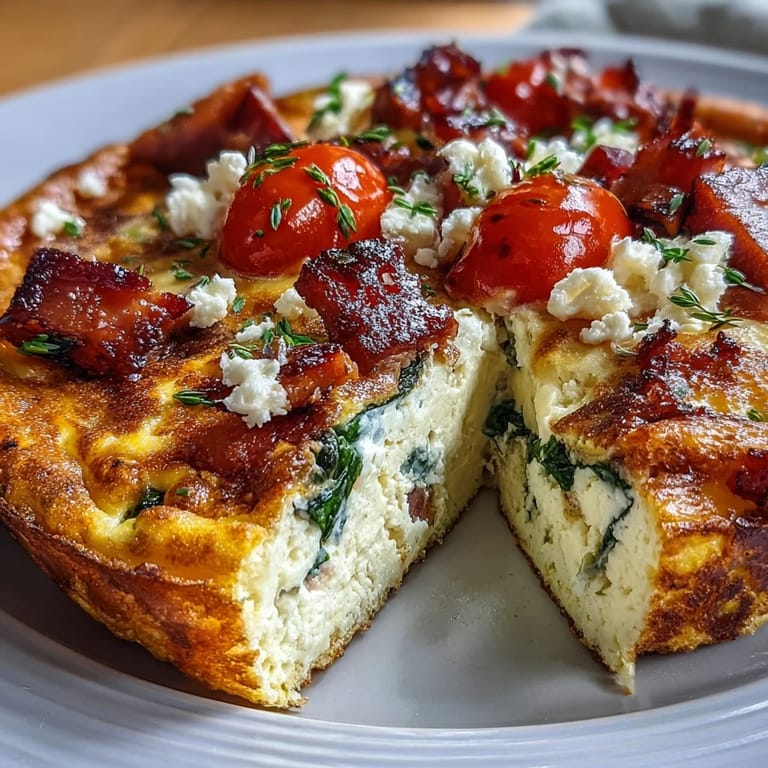
Save This frittata has become my answer to the question of how to eat well when life gets complicated. It's honest food that doesn't pretend to be anything more than what it is, and somehow that simplicity is exactly what makes it so good.
Recipe FAQs
- → Can I substitute the cheddar cheese?
Yes, Swiss or feta cheese can be used for a different flavor profile without affecting the cooking process.
- → How do I ensure the frittata is cooked evenly?
Cook the egg mixture briefly on the stovetop before transferring to the oven. Baking at 375°F until the center is set ensures even cooking.
- → Can I prepare the frittata ahead of time?
Yes, once cooled, it can be refrigerated for up to 4 days and reheated in the microwave or enjoyed cold.
- → What vegetables can I add for extra flavor?
Bell peppers, mushrooms, or additional greens like kale can be added during the sauté step for more texture and nutrients.
- → Is this dish suitable for gluten-free diets?
The ingredients used are naturally gluten-free, but ensure the ham and cheeses are labeled gluten-free to avoid cross-contamination.