 Save
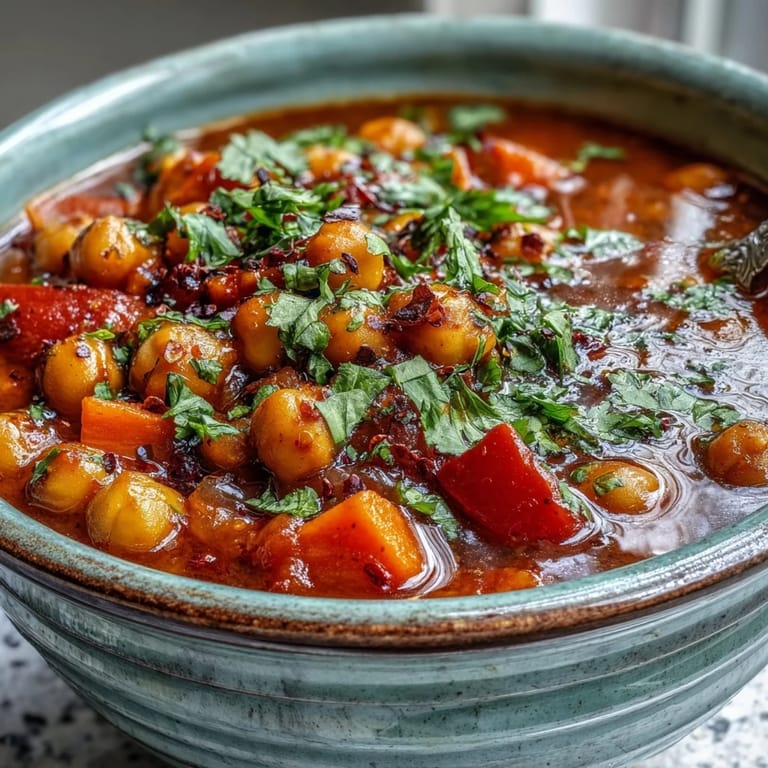
Save There was a Tuesday evening when my kitchen felt too quiet, and the weather had turned that particular shade of grey that demands something warm in a bowl. I opened the pantry and found two cans of chickpeas staring back at me, and suddenly I was thinking about the spice market I'd wandered through months earlier—cumin, paprika, cinnamon all mingling in the air. That's when this stew was born, and it's been my go-to answer ever since for those moments when comfort food needs to be both quick and genuinely nourishing.
I made this for a friend who'd mentioned being overwhelmed with work, and watching her face when she tasted it—the way she paused mid-spoonful and just smiled—that's when I knew this recipe had staying power. She came back asking for it three times that winter, each visit followed by a container request for leftovers.
Ingredients
- Chickpeas (2 cans, 15 oz each): The protein backbone that keeps you full and grounded; always drain and rinse them to remove that tinny canned taste and reduce any digestive heaviness.
- Onion (1 large, finely chopped): Your flavor foundation that softens into sweetness when given time over heat.
- Garlic (2 cloves, minced): Two cloves is gentle enough not to overwhelm, but enough to whisper warmth into every spoonful.
- Carrots (2, diced): These add natural sweetness and substance that balances the spices beautifully.
- Red bell pepper (1, diced): Brings brightness and a subtle sweetness that cuts through the earthiness of the chickpeas.
- Diced tomatoes (1 can, 14 oz): Use canned tomatoes rather than fresh here; they're more consistent and their acidity is crucial for balance.
- Vegetable broth (2 cups): Quality matters—a good broth tastes like it was actually simmered with intention.
- Tomato paste (2 tablespoons): This concentrated umami deepens everything and thickens the stew naturally as it cooks.
- Olive oil (2 tablespoons): The medium that carries all your spices and builds the flavor base.
- Ground cumin (1 teaspoon): Earthy and warm, this is your anchor spice that everything else dances around.
- Smoked paprika (1 teaspoon): Even though nothing's actually smoked here, this paprika gives that impression of depth and subtle heat.
- Ground coriander (1/2 teaspoon): A quieter spice that adds a gentle citrus undertone without announcing itself.
- Ground turmeric (1/2 teaspoon): This golden spice adds warmth and a slight earthiness, plus it's doing invisible work supporting your body.
- Chili flakes (1/2 teaspoon): Adjust this up or down based on who you're feeding; it builds heat slowly rather than striking all at once.
- Ground cinnamon (1/2 teaspoon): Just enough to create a subtle sweetness that makes people wonder what they're tasting.
- Bay leaf (1): Remove it before serving, but it's been quietly enhancing everything the whole time.
- Salt and black pepper: Add these at the end when you can actually taste everything together; your palate is the final judge.
- Lemon juice (1/2 lemon): This bright finish wakes everything up and prevents the stew from tasting one-note.
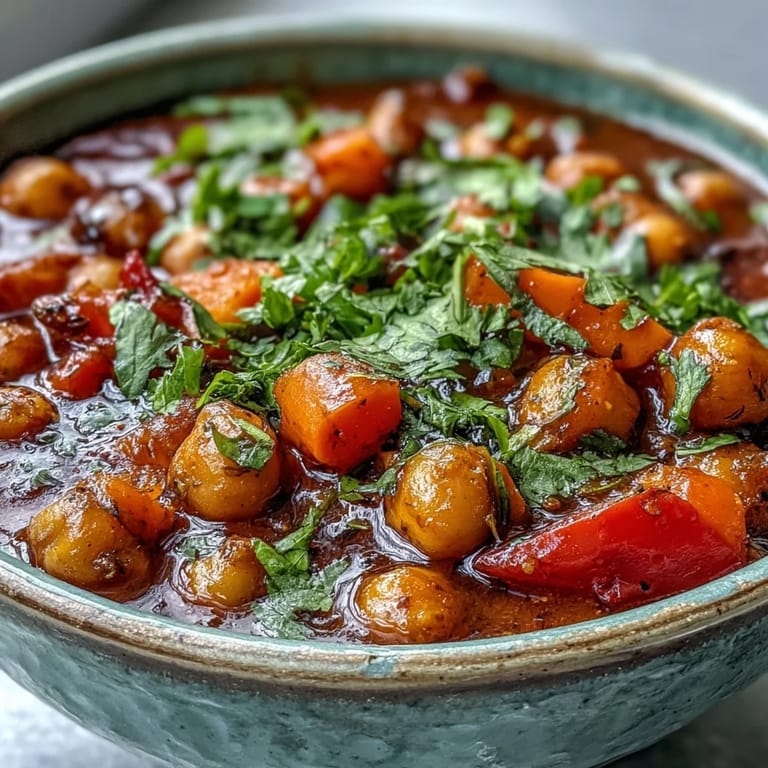
- Fresh cilantro or parsley (2 tablespoons, chopped): This final layer of freshness is what transforms a good stew into one that lingers in memory.
Tired of Takeout? 🥡
Get 10 meals you can make faster than delivery arrives. Seriously.
One email. No spam. Unsubscribe anytime.
Instructions
- Set Your Stage with Oil and Onion:
- Pour the olive oil into your pot over medium heat and let it warm through until it shimmers slightly. Add your chopped onion and listen for that soft sizzle; you're aiming for 4 to 5 minutes of cooking, just until the onion becomes translucent and starts to soften.
- Build Your Flavor Base:
- Stir in the garlic, carrots, and bell pepper, and let them mingle with the oil and onion for another 3 to 4 minutes. You're creating aromatic layers here, not browning anything aggressively.
- Wake Everything Up with Spices:
- Add all your spices at once—cumin, paprika, coriander, turmeric, chili flakes, and cinnamon—and stir constantly for just 1 minute. You'll smell the shift as the heat opens up their essential oils and fills your kitchen with that unmistakable warm spice aroma.
- Bring It Together:
- Stir in the tomato paste first, letting it coat everything, then add the diced tomatoes, drained chickpeas, vegetable broth, and bay leaf. Stir once or twice, then let it come to a boil.
- Let Time Do the Work:
- Reduce the heat, cover the pot, and simmer for 25 minutes, stirring occasionally so nothing sticks to the bottom. The stew will deepen in color and the flavors will marry into something more complex than their individual parts.
- Thicken and Season:
- Remove the lid and simmer uncovered for another 5 minutes; the liquid will reduce slightly and the stew will become more substantial. Taste it now and season generously with salt and black pepper, adjusting to your preference.
- Finish with Brightness:
- Fish out the bay leaf, stir in the lemon juice and fresh herbs, and taste once more. This final step is crucial—the lemon prevents the stew from tasting flat, and the herbs add a note of freshness that makes it feel alive.
 Save
Save One rainy afternoon, my neighbor came over just as this stew was finishing, and she stayed for almost an hour longer than planned, talking over bowls of it and crusty bread. That's when I realized this recipe had become something more than dinner—it had become an excuse to slow down.
The Secret of Spice Timing
The moment when you add those spices and they hit the hot oil is everything in this stew. Some people rush through that step, but if you pause and let them toast for that full minute, your kitchen will smell completely different. That fragrant moment—before the tomatoes and broth go in—is where the entire character of the dish is born. I've learned that patience here pays off in ways that rushing never will.
Customizing Your Heat
The half teaspoon of chili flakes I've called for sits somewhere in the middle of the spice spectrum. If you're cooking for people who prefer gentler flavors, use a quarter teaspoon and let them add their own at the table; if you're cooking for heat lovers, go ahead and use three-quarters. The beauty of this stew is that it's flexible enough to accommodate different preferences without losing its essential warmth and comfort.
Making It Your Own
This is the kind of recipe that invites improvisation without judgment. I've added diced jalapeños for extra bite, swapped in spinach for extra greens, and once even threw in a handful of diced sweet potato when I had one lying around. The structure stays solid no matter what you adjust, which means you can make this stew a hundred times and it will never feel boring.
- If you want extra richness, swirl in a spoonful of tahini or coconut milk right at the end.
- Leftover stew tastes noticeably better the next day once all the flavors have had time to get to know each other.
- This freezes beautifully for up to three months, making it perfect for meal prep or unexpected dinner emergencies.
 Save
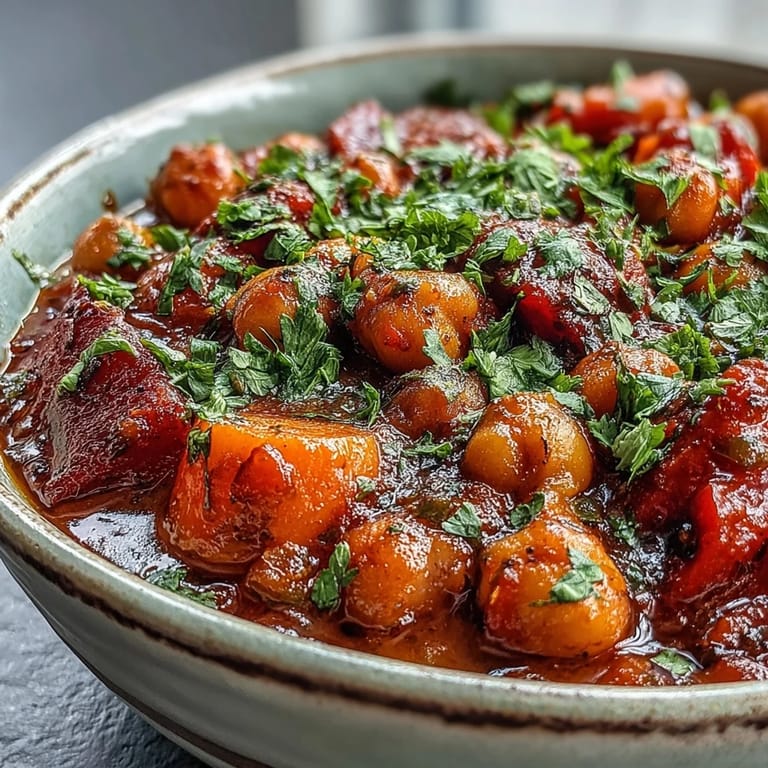
Save This stew has taught me that the most comforting meals don't have to be complicated—they just have to be made with attention and intention. It's become my answer to almost every question: What's for dinner? What should I bring to share? What do you make when you want to feel held by food?
Recipe FAQs
- → Can I use dried chickpeas instead of canned?
Yes, use 1.5 cups dried chickpeas soaked overnight and cooked until tender before adding to the stew. This may add 1-2 hours to cooking time.
- → How can I make this stew spicier?
Increase the chili flakes to 1 teaspoon or add a diced jalapeño with the vegetables. You can also add a pinch of cayenne pepper for extra heat.
- → What can I serve with this stew?
Serve with crusty bread for dipping, over fluffy rice, with warm pita, or alongside couscous. A dollop of coconut yogurt also complements the spices beautifully.
- → How long does this stew keep in the refrigerator?
Store in an airtight container for up to 5 days. The flavors meld and intensify over time, making leftovers especially delicious.
- → Can I freeze this chickpea stew?
Absolutely. Freeze in portions for up to 3 months. Thaw overnight in the refrigerator and reheat gently on the stovetop, adding a splash of broth if needed.
- → What vegetables can I substitute or add?
Try adding diced zucchini, spinach, kale, or sweet potato. Celery works well in place of bell pepper, and you can add eggplant for extra heartiness.