 Save
Save There was something almost meditative about the afternoon I stood at my kitchen counter with a colander full of tomatoes that my neighbor had pressed into my hands, still warm from her garden. She'd mentioned offhandedly that they were too many for her to use, and I found myself suddenly committed to doing right by them. That's when tomato and basil soup became less about following a recipe and more about honoring what she'd grown—turning those bright, fragrant orbs into something that filled the entire house with the smell of summer, even though it was already October.
I served this soup to my sister on a rainy weeknight when she'd had a terrible day at work, and I remember the exact moment her shoulders relaxed as she took that first spoonful. She closed her eyes and said nothing for a while, which said everything. That's when I realized this wasn't just soup—it was the kind of thing you make when you want someone to know they're cared for without having to say it out loud.
Ingredients
- Ripe tomatoes (1.5 kg, chopped): Use tomatoes at peak ripeness—they should give slightly when you press them gently—because the flavor they bring is the entire foundation of this soup.
- Medium onion (finely chopped): The onion softens first and becomes almost invisible in the final silky texture, but it's what builds the depth underneath everything else.
- Garlic (2 cloves, minced): Add it gently after the onion has had time to soften so it infuses without burning or turning bitter.
- Vegetable stock (700 ml): The quality of your stock matters more than you'd think—use one you'd actually want to drink on its own, not a sad corner-store version.
- Extra virgin olive oil (2 tbsp): This is what makes the soup taste like it came from someone's Italian grandmother's kitchen, so don't reach for the generic stuff.
- Fresh basil (1 small bunch, leaves picked): The basil should smell almost aggressively fragrant when you tear the leaves—if it smells like nothing, it's lost its magic.
- Salt (1 tsp, or to taste): Taste as you go because store-bought stocks vary wildly in their saltiness.
- Freshly ground black pepper (½ tsp): Grind it fresh just before adding—the difference between pre-ground and fresh is like the difference between a photograph and being there in person.
- Sugar (1 tsp, optional): This isn't about making it sweet; it's about balancing the acidity of the tomatoes so the soup tastes round and complete.
- Garnish basil and olive oil for drizzling: These final touches turn a bowl of soup into something you actually want to photograph and share.
Tired of Takeout? 🥡
Get 10 meals you can make faster than delivery arrives. Seriously.
One email. No spam. Unsubscribe anytime.
Instructions
- Coax the onion into softness:
- Warm the olive oil over medium heat until it's shimmering but not smoking, then add your onion and let it sit for about five minutes. You're listening for a gentle sizzle, watching for the edges to turn translucent, and somehow the kitchen already smells like something good is happening.
- Wake up the garlic:
- Stir in the minced garlic and give it just one minute of attention—you want that sharp, raw edge to mellow into the oil, but not long enough for it to brown and turn acrid. The moment it's fragrant is the moment you move on.
- Let the tomatoes tell their story:
- Add all your chopped tomatoes and resist the urge to rush this part. Let them cook for about ten minutes, breaking down under their own heat, until the kitchen is filled with this concentrated tomato smell and the mixture looks like it's already becoming soup.
- Build the foundation:
- Pour in your vegetable stock and add the salt, pepper, and sugar if you're using it. Bring everything to a boil, watching it bubble and shift, then turn the heat down and let it simmer gently for fifteen minutes—this is when all the flavors actually start having conversations with each other.
- Bring in the basil magic:
- Tear in most of your basil leaves (holding back a few for the top) and immediately reach for your immersion blender. Move it through the soup in slow, steady motions until everything turns into this silky, vibrant red mixture that barely looks like it started as chopped vegetables.
- Taste and adjust your way to perfection:
- Dip a spoon in, blow on it, taste it, and actually think about what you're tasting. Maybe it needs more salt, maybe a crack more pepper—this step is where you make it yours instead of just following orders.
- Pour and celebrate:
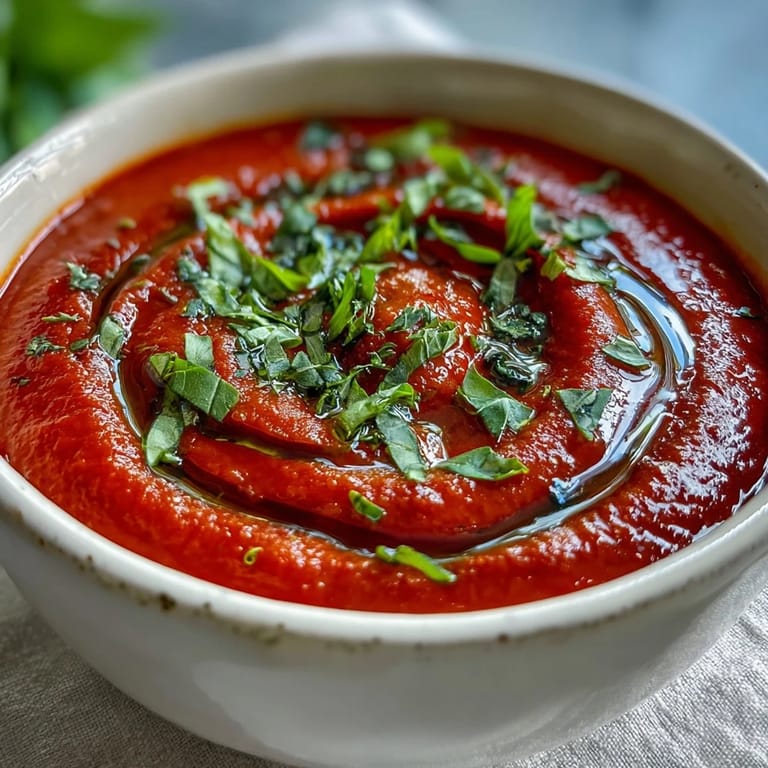
- Ladle the soup into bowls while it's still steaming, top with a basil leaf and a thin drizzle of good olive oil, and serve it to people you care about or just to yourself on a quiet afternoon.
 Save
Save What moved me most about this recipe was discovering that the simplest things—good tomatoes, a handful of herbs, a moment of calm while something simmers—were somehow the most powerful. My friend sent me a photo months later of her making this soup in her own kitchen, and that meant more than if she'd sent me a review of a restaurant.
When to Reach for This Soup
I've learned that this soup works for so many different moments—it's light enough for when you want something nourishing but not heavy, elegant enough to serve to guests without feeling like you're cutting corners, and comforting enough to turn around a day that went wrong. It's also the kind of soup that tastes even better the next day, after all the flavors have had time to settle and deepen.
Making It Your Own
The beauty of this recipe is that it's flexible enough to bend to what you have or what you're craving. I've made it with canned tomatoes in the dead of winter and it's still been delicious, though not quite the same magic as fresh. The cream variation turns it into something completely different—richer, more luxurious, almost like you've transformed it into a different dish entirely.
The Details That Actually Matter
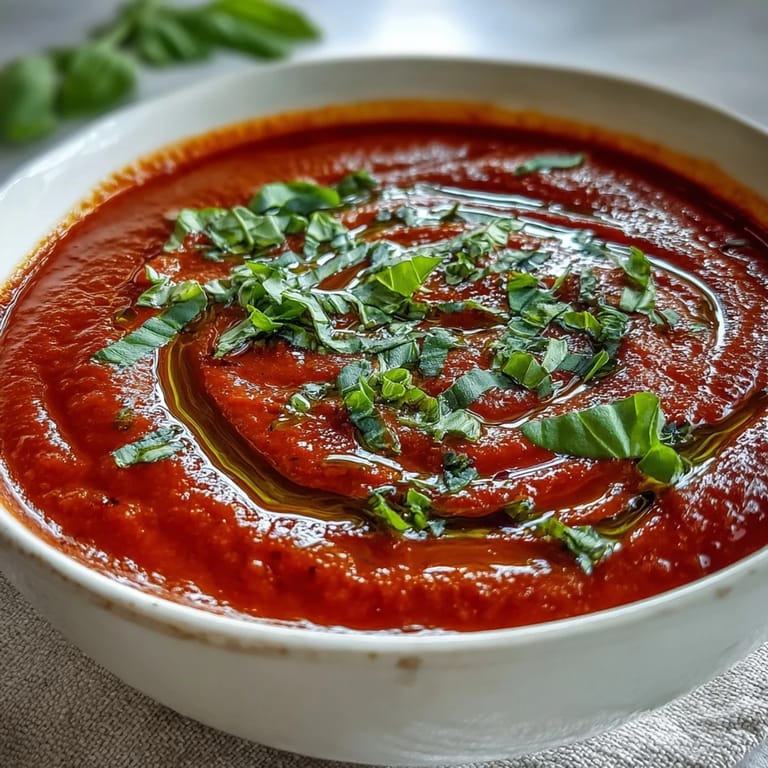
Over time I've realized that how you finish this soup matters as much as how you make it. The basil leaves on top should be fresh and whole, not torn into tiny pieces, and the olive oil should be drizzled in a thin stream so it sits on the surface catching the light. These aren't pretentious flourishes—they're the difference between a bowl of soup and an experience worth slowing down for.
- If you're making this for a crowd, you can multiply the recipe easily, though I'd recommend making it in batches if your pot isn't enormous.
- Crusty bread for dunking or a grilled cheese sandwich beside the bowl transforms it from appetizer into a complete, satisfying meal.
- A small dollop of sour cream or crème fraîche on top adds richness without fully committing to the cream version.
 Save
Save Make this soup when you want to remember why simple food, made with attention and good ingredients, is sometimes the best kind of cooking. It's the sort of thing that reminds you that not everything needs to be complicated to be worth making.
Recipe FAQs
- → Can I use canned tomatoes instead of fresh?
Yes, you can substitute 800g of canned whole or crushed tomatoes for fresh ones. Canned tomatoes work especially well outside peak tomato season and will still deliver excellent flavor.
- → How can I make this soup creamier?
Add 100ml of heavy cream or coconut milk before blending for a luxuriously creamy texture. Coconut milk keeps it dairy-free while adding richness.
- → Can I freeze this soup?
Absolutely. This soup freezes beautifully for up to 3 months. Cool completely, then store in airtight containers. Thaw overnight in the refrigerator and reheat gently on the stove.
- → What can I serve with tomato and basil soup?
Crusty bread, grilled cheese sandwiches, or garlic bread pair wonderfully. For a lighter option, serve with a simple green salad dressed with olive oil and lemon.
- → Why add sugar to the soup?
A small amount of sugar balances the natural acidity of tomatoes, creating a more rounded, harmonious flavor. Start with half a teaspoon and adjust to taste.
- → How do I know when the tomatoes are cooked enough?
The tomatoes should be completely broken down and releasing their juices after about 10 minutes of cooking. They'll appear soft and saucy before adding the stock.